What Is Expedited Shipping? Meaning, Delivery Times, Costs, and Business Use Cases

Expedited shipping sounds simple: move the shipment faster.
In practice, speed is only useful if the delivery still arrives in the right window, with the right handoff, at a cost the business can defend. A faster label does not fix a missed cutoff time, an unavailable recipient, poor tracking, or a delivery that arrives without proof of completion.
That distinction matters more than ever. U.S. ecommerce sales reached an estimated $1.2337 trillion in 2025, according to the U.S. Census Bureau. At the same time, customers are becoming more selective about when they will pay for speed. McKinsey found that 90% of consumers are willing to wait two or three days to avoid shipping costs.
So the question for businesses is not simply, “How fast can this ship?”
The better question is: When does expedited shipping protect the customer experience, reduce operational risk, or keep a critical workflow moving?
What Is Expedited Shipping?

Expedited shipping is any shipping or delivery service that moves faster than a business’s standard shipping option. It may include same-day, next-day, two-day, express, overnight, or 1–3 business day delivery, depending on the provider, distance, cutoff time, and service level.
The key phrase is faster than standard. Expedited shipping does not always mean a package moves directly from pickup to delivery. Some expedited shipments may use priority handling within a carrier network. Others may use air transport, faster ground routing, direct courier service, or a dedicated vehicle.
For businesses, expedited shipping is most useful when timing affects the outcome of the delivery. That might include:
- A replacement order sent after a failed delivery
- A prescription or medical supply needed by a patient
- A critical part required to avoid downtime
- A perishable or temperature-sensitive shipment
- A high-value item that needs tighter visibility
- A confidential document requiring verified handoff
FedEx notes that expedited shipping options can include same-day, overnight, and two-day delivery, which reflects how broad the category can be. The right expedited option depends on the shipment’s urgency, destination, handling needs, and acceptable cost.
That makes expedited shipping less of a single product and more of a service-level decision. A small ecommerce replacement order, a local prescription delivery, an overnight legal packet, and a same-day critical parts run may all be “expedited,” but they do not require the same provider model. The right choice depends on how much control the shipment needs once it leaves the business.
How Long Does Expedited Shipping Take?
Expedited shipping time varies by provider and service level. In many cases, expedited shipping may mean:
- Same-day delivery
- Next-day delivery
- Two-day delivery
- 1–3 business day delivery
- A faster delivery window than the standard option
“Expedited” does not automatically mean overnight. Overnight shipping is one type of expedited service, but expedited delivery can also include same-day courier service, two-day parcel delivery, priority freight, or other accelerated delivery models.
Businesses should also separate order processing time from delivery time. A shipment may qualify for expedited delivery after dispatch, but the total customer wait time still depends on when the order is picked, packed, labeled, and handed off to the carrier or courier.
Several factors can affect expedited delivery time:
- Order cutoff time
- Fulfillment readiness
- Distance between pickup and delivery
- Service area coverage
- Weekends and holidays
- Weather or traffic conditions
- Package size and handling requirements
- Whether the shipment needs a parcel carrier, courier, or dedicated vehicle
For businesses, the practical issue is not just the quoted transit time. It is whether the operation can support the promise. If an order misses the carrier cutoff, sits in fulfillment, lacks accurate recipient information, or requires special handling that was not planned upfront, the expedited delivery window may be missed before the shipment ever starts moving.
That is why customer-facing promises should be tied to internal cutoff times, inventory availability, packaging readiness, and provider capacity. “Expedited” should be a service level the business can execute consistently, not a panic button pressed after the workflow is already behind.
For urgent local shipments, same-day courier delivery may offer more control than a general parcel carrier upgrade. For businesses comparing timing options, this guide to same-day vs. next-day delivery explains when each model makes sense.
Expedited Shipping vs. Standard, Express, Priority, Overnight, and Same-Day Delivery
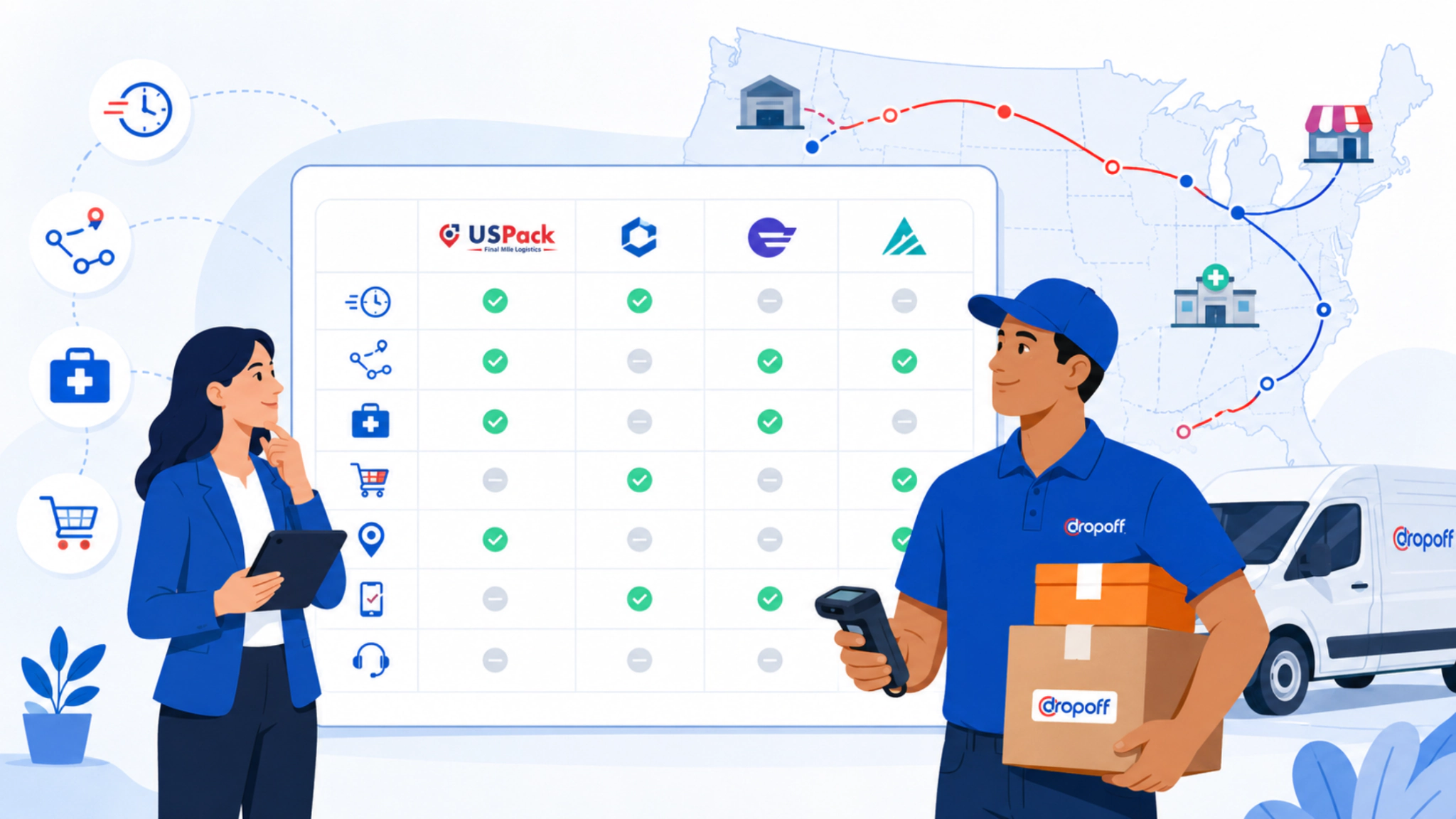
Shipping terms often overlap. “Expedited,” “express,” “priority,” and “same-day” may mean different things depending on the carrier or courier. The table below gives a practical comparison.
| Shipping option | What it means | Typical speed | Best for | Key tradeoff |
| Standard shipping | Default shipping option | Several business days | Non-urgent shipments | Lower cost, longer delivery window |
| Economy shipping | Lower-cost shipping option | Usually slower than standard or similar to standard | Low-margin, non-urgent orders | Cost savings, slower speed |
| Priority shipping | Preferential handling within a shipping network | Varies by provider | Moderately time-sensitive shipments | Faster than standard, but not always time-specific |
| Expedited shipping | Faster-than-standard shipping or delivery | Same-day, next-day, two-day, or 1–3 business days | Time-sensitive shipments | Higher cost, service-level variation |
| Express shipping | Often one of the fastest service tiers | Same-day, next-day, or two-day | Urgent shipments | Premium cost |
| Overnight shipping | Delivery by the next business day | Next day | Firm next-day deadlines | Higher cost and cutoff dependency |
| Same-day delivery | Pickup and delivery on the same day | Same day | Urgent local deliveries | Requires local courier or last-mile capability |
Expedited vs. standard shipping: Expedited shipping is faster than standard shipping and usually costs more. Standard shipping works best when the shipment is less urgent and the business can use a wider delivery window.
Expedited vs. express shipping: Express delivery is often one of the fastest available service levels. Expedited shipping is broader and can include several faster-than-standard options. Businesses that need time-specific service may want to evaluate an express delivery service rather than relying on a generic expedited label.
Expedited vs. priority shipping: Priority shipping may mean preferential handling, but it does not always guarantee the fastest or most precise delivery window.
Expedited vs. overnight shipping: Overnight shipping is a specific next-day service. Expedited shipping can include overnight, but it may also include same-day, two-day, or other accelerated options.
Expedited vs. same-day delivery: Same-day delivery is often a form of expedited delivery, especially for urgent local shipments. It usually requires a courier or last-mile delivery partner that can support pickup, tracking, recipient handoff, and delivery confirmation within the same day.
A simple way to choose the right model is to start with the constraint:
| If the main constraint is… | The better fit may be… |
| Lower cost for a non-urgent shipment | Standard or economy shipping |
| A moderately faster delivery window | Priority or expedited parcel shipping |
| A firm next-day deadline | Overnight or express shipping |
| A local delivery that must arrive today | Same-day courier delivery |
| A recurring urgent delivery pattern | Scheduled or route delivery |
| A sensitive handoff that needs documentation | Courier delivery with tracking and proof of delivery |
This matters because “faster” is not always specific enough. A shipment that needs to arrive sometime in the next two days and a shipment that needs a verified handoff by 3 p.m. today are different operational problems.
When Should Businesses Use Expedited Shipping?

Expedited shipping works best when speed protects a business outcome. The strongest use cases usually involve customer recovery, operational continuity, product condition, or sensitive handoffs.
1. Urgent customer replacements or failed delivery recovery
When a shipment is late, damaged, lost, or delivered incorrectly, expedited delivery can help preserve the customer relationship before the issue becomes a refund, cancellation, bad review, or support escalation.
This is especially useful for high-value orders, VIP customers, replacement items, and service recovery situations where waiting several more days would compound the original failure. In those cases, the expedited shipment is not just a faster package. It is the recovery plan.
2. Perishable or temperature-sensitive goods
Perishable goods such as food, flowers, specialty grocery items, and certain temperature-sensitive products may lose value when they spend too long in transit. Expedited shipping can help reduce transit time and limit avoidable spoilage, especially when paired with proper packaging and clear delivery windows.
3. Healthcare and medical deliveries
Healthcare deliveries often need more than speed. Prescriptions, medical supplies, lab-related materials, and other patient-related shipments may require reliable handoffs, visibility, documentation, and clear exception handling.
For certain specimen-related workflows,CDC guidance on documentation, chain of custody, and specimen packaging underscores why sensitive healthcare shipments need careful handling and clear records. Businesses looking for urgent medical delivery support should evaluate healthcare courier services based on delivery visibility, courier training, handoff documentation, recipient verification, and support availability.
The delivery question is not only whether the item arrived quickly. It is whether the organization can see where it went, who received it, when it arrived, and what happened if the delivery did not go as planned.
4. Critical parts, equipment, and inventory replenishment
Expedited shipping can help businesses recover from stockouts, supplier delays, or unexpected equipment needs. For industrial, retail, and field operations teams, a delayed part or inventory transfer can interrupt more than a delivery.
A missing replacement part can leave a technician waiting. A delayed store transfer can keep a shelf empty during peak demand. A late supply run can force teams to reschedule work that was already staffed. In these cases, expedited delivery helps protect labor, revenue, and customer commitments.
5. High-value or confidential shipments
Confidential documents, legal packets, electronics, financial materials, and other high-value items may require verified handoff. In these cases, expedited delivery should be paired with tracking, recipient verification, and proof of completion.
When Expedited Shipping May Not Be Worth It
Expedited shipping is valuable when the urgency justifies the added cost. It is less useful when speed becomes a blanket promise with no clear business case behind it.
Expedited shipping may not be the best fit when:
- The shipment requires documentation, recipient verification, or exception management more than raw speed
- The order is low-margin and non-urgent
- Customers prefer free or predictable shipping over speed
- Inventory is not ready before the cutoff time
- Fulfillment, packing, or labeling workflows are inconsistent
- The destination is outside reliable service coverage
- Recurring urgent deliveries would be better handled through scheduled or route delivery

This is where logistics risk management matters. Faster delivery can create new problems if the workflow around it is weak. A business may promise a shorter delivery window, but if handoffs are unclear, tracking is limited, the recipient is unavailable, or no one owns the exception, the expedited shipment can still fail.
The strongest expedited shipping strategy is selective. Use it where speed protects the customer, the product, or the operation. For everything else, a predictable standard, scheduled, or route-based delivery model may protect margin without weakening the customer experience.
Benefits of Expedited Shipping for Businesses
When used strategically, expedited shipping can improve more than delivery speed. It can help businesses protect revenue, reduce disruption, and give teams better control over urgent shipments.
1. Protect time-sensitive goods
Some shipments lose value when they sit too long in transit. Expedited delivery can help protect perishables, healthcare materials, urgent documents, high-value products, and replacement items that need to reach the recipient within a tighter window.
2. Recover customer issues faster
A fast replacement shipment can help repair the customer experience after a failed delivery, damaged item, or fulfillment issue. For ecommerce and retail teams, expedited delivery can be a practical recovery tool when the cost of losing the customer is higher than the cost of moving the shipment faster.
3. Reduce handoff risk
Every handoff introduces potential risk: missed scans, delays, damage, misplaced packages, or unclear custody. Some expedited and courier delivery models can reduce unnecessary handoffs, especially for urgent local shipments that benefit from direct routing or tighter chain-of-custody visibility.
4. Support urgent replenishment
Expedited shipping can help teams respond to inventory gaps without permanently carrying excess stock in every location. It can also support urgent replenishment when demand spikes, a local store needs fast restocking, or a field team needs materials before work can continue.
5. Improve delivery visibility
For business operators, tracking is more than a customer convenience. Strong last-mile delivery tracking can help teams monitor delivery status, estimate arrival, manage exceptions, and communicate more clearly with customers or internal stakeholders.
6. Create a clearer delivery record
Some shipments require stronger delivery controls, including documented handoffs, recipient confirmation, timestamps, and delivery records. In those cases, proof of delivery can help verify that the shipment reached the right destination and was completed as expected.
How Much Does Expedited Shipping Cost?

Expedited shipping cost varies widely. A small local delivery, a two-day parcel shipment, an overnight package, and a same-day medical delivery can all fall under expedited delivery, but their cost structures are different.
Common cost factors include:
- Delivery speed
- Delivery distance
- Package size and weight
- Service area
- Delivery window
- After-hours or weekend delivery
- Vehicle type
- Special handling
- Temperature sensitivity
- Proof of delivery or recipient verification needs
- Chain-of-custody requirements
- One-time shipment vs. recurring volume
- Carrier or courier availability
Two shipments can look similar on paper and still price differently. A 10-mile delivery during business hours may be straightforward. The same distance after hours, with a narrow delivery window, recipient verification, or temperature-sensitive handling, can require a different cost structure.
That is why businesses should evaluate expedited shipping cost in context. The better question is not only “What is the rate?” but “What does this shipment require to arrive successfully?”
For more detail on the operational factors behind delivery pricing, see this breakdown of last-mile delivery costs.
How Businesses Can Control Expedited Shipping Costs
Expedited shipping can get expensive when every urgent request is handled as a one-off. Cost control starts with defining when speed is truly required.
Practical ways to reduce expedited shipping costs include:
- Set clear eligibility rules for expedited delivery.
- Define order cutoff times by service level.
- Offer tiered shipping options instead of one default promise.
- Avoid promising expedited delivery before inventory is confirmed.
- Use local inventory, store-to-door fulfillment, or regional distribution when possible.
- Consolidate recurring urgent deliveries into scheduled or fixed-route delivery programs.
- Track failed delivery attempts, delivery exceptions, and cost per delivery.
- Match the provider model to the shipment’s actual need.
For example, a single urgent customer replacement may call for on-demand courier delivery. A recurring flow of time-sensitive parts, prescriptions, lab materials, or retail replenishment may be better served by a scheduled route. The first is an exception. The second is a pattern.
That distinction matters. When businesses treat every recurring urgent shipment like a one-off emergency, they usually pay more and get less consistency. When they identify the pattern, they can build a delivery model around the actual workflow.
Expedited Shipping Decision Checklist
Use this checklist before choosing an expedited shipping option:
| Question | Why it matters |
| When does the shipment actually need to arrive? | Helps determine whether standard, expedited, overnight, or same-day delivery is the right fit. |
| Is the item ready before the cutoff time? | Prevents missed delivery windows caused by internal fulfillment delays. |
| Does the shipment need recipient verification? | Helps determine whether proof of delivery or signature capture is required. |
| What happens if the recipient is unavailable? | Clarifies exception handling before the shipment is already in motion. |
| Is this a one-time urgent shipment or a recurring pattern? | Helps determine whether on-demand, scheduled, or route delivery is more cost-effective. |
| Does the shipment involve healthcare, high-value goods, perishables, or confidential documents? | Identifies whether special handling, documentation, or tighter visibility is needed. |
What to Look for in an Expedited Shipping Partner
The right expedited shipping partner should offer more than faster movement. Businesses should look for a provider that can support the operational requirements around urgent delivery, especially when shipments are local, time-sensitive, high-value, healthcare-related, or recurring.
A strong expedited shipping provider should offer:
- Same-day, next-day, express, or scheduled delivery options
- Real-time tracking and clear delivery status updates
- Accurate ETAs and delivery-window visibility
- Digital confirmations
- Proof of delivery
- Recipient verification when needed
- Exception management
- Vetted couriers
- Customer support availability
- Healthcare or regulated workflow experience when applicable
- Transparent pricing or quoting
- Support for one-time urgent shipments and recurring delivery programs
Before choosing a provider, businesses should ask a few practical questions:
- Can we see the shipment status in real time?
- What proof do we receive after delivery?
- What happens if the recipient is unavailable?
- Who manages exceptions after hours?
- Can the provider support both one-off urgent deliveries and recurring routes?
- Can the delivery workflow be adapted for healthcare, retail, industrial, or enterprise needs?
This is especially important for businesses shipping healthcare items, high-value goods, confidential documents, perishables, or critical parts. In those cases, the provider’s ability to manage handoffs, exceptions, and documentation can matter as much as delivery speed.
For urgent local shipments, businesses may need a courier partner that can support real-time tracking, documented handoffs, and delivery windows built around the workflow.
How Dropoff Supports Expedited and Same-Day Delivery
Dropoff helps businesses manage same-day and last-mile delivery when expedited delivery requires more than a faster label.
That usually happens when the shipment is urgent, local, high-value, healthcare-related, recurring, or dependent on a documented handoff. In those situations, businesses need more than a carrier upgrade. They need visibility into the delivery, confidence in the handoff, and support when something changes.
Dropoff supports on-demand, scheduled, route, and express delivery programs with real-time tracking, digital confirmations, vetted couriers, 24/7 support, and customized workflows for healthcare, retail/ecommerce, and enterprise operations. Dropoff is trusted by 270+ national brands for mission-critical logistics.
For businesses moving urgent shipments, the goal is not simply to move faster. It is to keep the delivery visible, accountable, and aligned with the workflow from pickup through final handoff.
Need expedited delivery with more visibility and control? Get a quote to build a same-day or expedited delivery program around your business needs.
Expedited Shipping FAQs
Expedited shipping means a shipping or delivery service that moves faster than a business’s standard shipping option. Depending on the provider and service level, expedited shipping may include same-day delivery, next-day delivery, two-day shipping, overnight shipping, express delivery, or 1–3 business day delivery.
Expedited shipping may take the same day, next day, two days, or 1–3 business days. The exact expedited shipping time depends on the provider, delivery distance, cutoff time, fulfillment readiness, service area, package requirements, and whether the shipment needs parcel, courier, or dedicated delivery support.
Yes. Expedited shipping is faster than standard shipping because it is designed to shorten the normal delivery window. It usually costs more than standard shipping because the shipment may receive faster handling, priority routing, express service, or courier delivery support.
Expedited shipping and express shipping are related, but they are not always the same. Express shipping is often one of the fastest service levels a carrier or courier offers, while expedited shipping is a broader term for any delivery option that is faster than standard shipping.
No. Expedited shipping does not always mean overnight shipping. Overnight delivery is one type of expedited shipping, but expedited service may also include same-day delivery, two-day delivery, express delivery, or another accelerated delivery window depending on the provider.
Yes, same-day delivery is often considered a form of expedited shipping because it moves faster than standard delivery. Same-day delivery is usually local, time-specific, and often requires a courier or last-mile delivery provider that can support pickup, tracking, handoff, and delivery confirmation within the same day.
Expedited shipping cost depends on delivery speed, distance, package size and weight, service area, delivery window, special handling needs, and provider. Shipments that require after-hours delivery, temperature control, recipient verification, proof of delivery, or chain-of-custody documentation may cost more.
Expedited delivery is best for time-sensitive shipments such as urgent replacements, perishable goods, medical supplies, prescriptions, lab-related materials, critical parts, confidential documents, high-value products, retail replenishment, and customer recovery shipments after a missed or failed delivery.
Businesses should look for an expedited shipping provider with reliable same-day, next-day, express, or scheduled delivery options; real-time tracking; clear ETAs; proof of delivery; digital confirmations; recipient verification when needed; exception support; vetted couriers; and the ability to support one-off urgent shipments or recurring delivery programs.