What Is Contactless Delivery? How It Works, Benefits, and Business Use Cases
Contactless delivery is no longer just a safety measure. For businesses, it has become a practical last-mile delivery workflow that gives customers more flexible handoff options while helping operations teams maintain visibility, proof, and control.
That matters as delivery volume keeps rising. U.S. e-commerce sales reached an estimated $1.2337 trillion in 2025, accounting for 16.4% of total retail sales. More online orders mean more delivery handoffs, more customer expectations, and more opportunities for delays, disputes, or missed deliveries.
A strong contactless delivery program, sometimes called no-contact delivery, does more than move the handoff out of sight. It gives the customer a lower-friction delivery experience while giving the business a record of where the item was left, when it arrived, who handled it, and what happened if the delivery could not be completed as planned.
What Is Contactless Delivery?
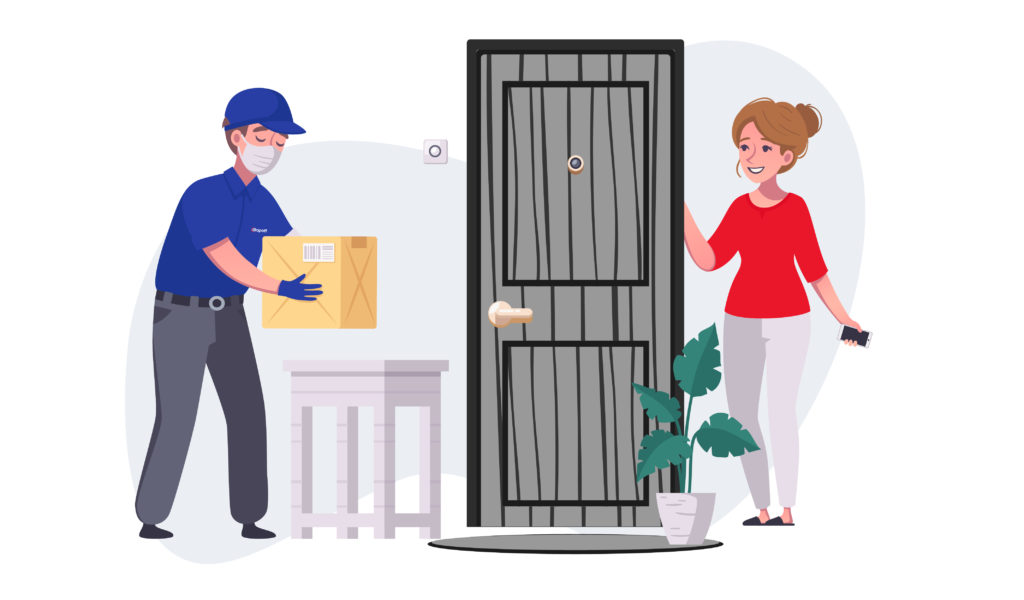
Contactless delivery is a delivery method where a courier completes the handoff without direct physical interaction with the recipient, usually by leaving the item in an approved location and confirming completion through digital proof of delivery.
The terms “contactless delivery,” “no-contact delivery,” “contact-free delivery,” and “no-touch delivery” are often used interchangeably. In each case, the goal is to reduce or remove the need for a face-to-face handoff between the courier and the recipient.
In practice, contactless delivery may involve doorstep delivery, lobby delivery, reception-area delivery, curbside pickup, smart locker pickup, or another approved handoff location. The right method depends on the delivery type, the customer’s instructions, the business’s requirements, and the level of documentation needed.
For businesses, the key point is not only avoiding direct contact. It is verifying that the delivery was completed correctly. A contactless delivery without confirmation can create support issues, delivery disputes, and operational blind spots. A contactless delivery with the right documentation creates a clearer record for customers, couriers, and operations teams.
How Does Contactless Delivery Work?

Contactless delivery works by replacing the direct handoff with a documented delivery workflow. The exact process varies by provider, industry, and shipment type, but most business contactless delivery workflows follow these steps:
- The customer places an order or delivery request.
The customer selects a delivery option, confirms the destination, and may choose contactless delivery if available. - The business collects delivery instructions.
Instructions may include a safe drop location, door code, suite number, front desk preference, delivery window, preferred contact method, or special handling notes. - The courier receives route, location, and handoff details.
The courier should know where to deliver the item, how to access the location, and what to do if the delivery cannot be completed as planned. - The courier delivers the item to the approved location.
This may be a doorstep, lobby, reception desk, mailroom, curbside area, or other approved location. - The courier captures proof of delivery.
This may include a photo, timestamp, location data, delivery notes, digital signature, or OTP/PIN confirmation depending on the workflow. - The recipient receives a notification.
The customer may receive a text, email, app notification, or delivery platform update once the item has been delivered. - The business retains the delivery record.
The delivery record can support customer service, audit needs, delivery disputes, and operational review.
For low-volume deliveries, this process may be simple. For high-volume retail, healthcare, pharmacy, or enterprise delivery programs, it needs to be standardized. The same instructions, proof requirements, notification triggers, and exception paths should apply across locations so delivery quality does not depend on one courier’s judgment, one customer service note, or one lucky photo angle.
This is where last-mile delivery tracking becomes important. Contactless delivery should still give customers and operations teams visibility into delivery status, ETA updates, and completion confirmation. The handoff may be no-touch, but the business should not be blind to what happened at the door, lobby, curb, or pickup point.
What Is Contactless Proof of Delivery?
Contactless proof of delivery is the digital record that confirms a no-contact delivery was completed. It helps businesses answer a simple but important question: did the item reach the right place at the right time?
For businesses, proof of delivery is one of the most important parts of a contactless delivery workflow. Without usable proof, a no-touch handoff can still create risk. A customer may not find the package. A delivery may be left in the wrong location. A support team may have no record to review. Tiny problem, giant inbox raccoon.
Photo Proof of Delivery
Photo proof of delivery gives the business and recipient visual confirmation that the item was delivered to the approved location. A useful delivery photo should show more than a box on a floor. When possible, it should capture enough context to confirm the drop location, such as the doorway, reception area, suite marker, locker, or other approved delivery point.
Photo confirmation is especially useful for doorstep deliveries, office deliveries, and e-commerce orders where the recipient may not be present for a direct handoff. It also helps support teams respond faster when a customer asks where an item was left or disputes whether a delivery arrived.
Timestamp and Location Capture
A timestamp helps confirm when the delivery was completed. Location capture, such as GPS or geotag data, can help verify where the courier was when the delivery was marked complete.
Together, time and location records reduce ambiguity. That matters when a delivery window is missed, a customer cannot find the item, a facility asks for delivery confirmation, or an operations team needs to review recurring issues by route, location, or time of day.
Digital Signatures, OTPs, or PINs When Needed
Some contactless deliveries require stronger verification than a photo. Digital signatures, one-time passwords, PIN confirmations, or recipient verification steps can provide extra control while still reducing physical contact.
These added controls are especially useful for sensitive, high-value, regulated, or time-critical deliveries where simply leaving the item unattended may not be appropriate.
Common Types of Contactless Delivery
Contactless delivery is broader than doorstep delivery. Businesses can use different no-contact delivery options depending on their customers, facilities, and risk requirements. For more context on delivery models, see Dropoff’s guide to the types of last-mile delivery.
1. Doorstep Delivery
Doorstep delivery is the most familiar form of contactless delivery. The courier leaves the item at the customer’s home, office, apartment door, or approved entrance and confirms completion digitally. It works best when the customer provides a clear safe drop location and the item can be left unattended without creating theft, weather, access, or compliance concerns.
2. Lobby or Reception-Area Delivery
Lobby or reception-area delivery is common for office buildings, apartment complexes, clinics, hotels, and facilities with a front desk or intake area. It can reduce missed handoffs when the final recipient is unavailable, but the delivery record should specify where the item was left and, when applicable, who received or accepted it.
3. Curbside Pickup
Curbside pickup is useful for retail, grocery, pharmacy, food service, and other businesses that want to reduce in-store traffic while still giving customers a convenient pickup option.
4. Smart Locker or Pickup Point
Smart lockers and pickup points allow customers to retrieve items from a secure location without direct courier interaction. This can be useful when recipients are unavailable during the delivery window.
5. Scheduled Unattended Delivery
Scheduled unattended delivery works when the delivery window, access instructions, drop location, and proof-of-delivery requirements are clear in advance. It is useful for recurring routes, business supplies, replenishment programs, and some local delivery models where the recipient does not need to interact with the courier each time.
6. Contactless Healthcare or Pharmacy Delivery
Healthcare and pharmacy deliveries may use contactless or low-contact workflows, but they often require more documentation. Depending on the shipment, businesses may need recipient verification, temperature control, chain of custody, or other delivery records.

Benefits of Contactless Delivery for Businesses
Contactless delivery is most valuable when it improves the customer experience without creating new blind spots for operations. The business benefit is not simply “less contact.” It is a smoother handoff with a cleaner record behind it.
1. Reduces Handoff Friction
Direct handoffs can slow down delivery when customers are unavailable, buildings are difficult to access, or staff are busy. Approved drop locations and clear delivery instructions can help couriers complete deliveries more efficiently.
2. Improves Customer Convenience
Customers do not always want to wait for a doorbell, answer a call, or coordinate a handoff. Contactless delivery lets recipients receive items with less interruption, especially when delivery instructions and notifications are handled well.
For retailers and e-commerce brands, that convenience can influence whether customers buy again. Delivery reliability affects customer trust, and DHL notes that a reliable delivery provider can be the difference between winning or losing the sale, especially when shoppers expect clear delivery information and simple returns.
3. Creates a Clear Delivery Record
A contactless delivery record gives support and operations teams something concrete to review. Instead of relying on memory, phone calls, or “it should be there,” teams can check the photo, timestamp, delivery notes, location data, and status update.
That record matters most when something goes wrong: a customer says the package never arrived, a front desk cannot locate the item, a courier reports access issues, or a delivery needs to be reviewed for compliance-sensitive documentation.
4. Reduces Missed Delivery Attempts
When a shipment can safely be left in an approved location, contactless delivery can reduce failed handoffs caused by unavailable recipients. Fewer missed attempts can also help control last-mile delivery costs, especially for high-volume delivery programs.
5. Supports Safer Delivery Preferences
Safety still matters, but it should be framed broadly. Contactless delivery can support customers, patients, couriers, or facility staff who prefer lower-contact interactions because of illness, facility protocols, or personal preference.
6. Improves Visibility for Support and Operations Teams
Delivery records help support teams answer customer questions faster. They also help operations teams spot recurring issues, such as unclear instructions, difficult access points, or locations with frequent exceptions.
Parcel volume adds to that pressure. According to the Pitney Bowes Parcel Shipping Index, U.S. parcel volume reached 22.37 billion shipments in 2024. At that scale, even small handoff problems can become expensive if they repeat across thousands of deliveries.
Contactless Delivery Use Cases by Industry

Contactless delivery can support many industries, but the workflow should match the shipment type.
Retail and E-Commerce
Retailers and e-commerce brands can use contactless delivery for same-day local delivery, doorstep delivery, curbside pickup, and returns pickup. For example, a customer may order an item from a local store, request doorstep delivery, receive an ETA notification, and get a photo confirmation once the order is left at the approved location.
The operational value is the record behind the experience. If the customer contacts support, the team can review the delivery status, photo, timestamp, and notes instead of starting from zero.
Returns are another pressure point. NRF projects $849.9 billion in retail returns in 2025, with 19.3% of online sales expected to be returned. Contactless pickup options can help retailers manage reverse logistics more conveniently when the pickup location, customer instructions, and confirmation process are clear.
Healthcare and Pharmacy
Healthcare and pharmacy deliveries may involve medical supplies, prescriptions, patient materials, specimens, or other sensitive items. These deliveries often need more than a basic doorstep dropoff.
A pharmacy delivery, for example, may allow a lower-contact handoff while still requiring recipient verification or delivery notes. A medical supply delivery may need proof that the package reached the right department, clinic, patient location, or receiving area. Specimen or regulated workflows may require chain-of-custody documentation.
For healthcare teams, the question is not only whether contact was reduced. It is whether the delivery can be traced, verified, and reviewed if needed. Dropoff supports healthcare delivery workflows where visibility, documentation, and reliable courier execution matter.
Enterprise and Office Logistics
Businesses can use contactless delivery for equipment, documents, supplies, mailroom delivery, interoffice logistics, or scheduled route delivery. For example, an IT team may send replacement equipment to an employee or office location without requiring a direct handoff, as long as the delivery record confirms where and when the item was left.
Lobby, reception-area, or mailroom handoffs can reduce delays while still giving teams a completion record. For internal operations, that record helps confirm accountability across departments, locations, and vendors.
Food and Grocery
Food and grocery deliveries are common contactless delivery examples. Customers may request doorstep dropoff, curbside pickup, or no-contact handoff instructions. For businesses, delivery speed, clear notifications, and accurate dropoff instructions are especially important.
High-Value or Time-Sensitive Deliveries
For high-value or time-sensitive items, contactless delivery needs stronger controls. Businesses may require photo confirmation, digital signature, PIN confirmation, restricted delivery locations, or exception handling if the courier cannot complete the delivery safely.
What Businesses Need to Offer Contactless Delivery Reliably

and collect photos, but the workflow still has to work on the curb, at the clinic, in the lobby, and at the locked apartment gate. Businesses need a process that connects delivery instructions, courier execution, tracking, proof, notifications, and support.
Clear Delivery Instructions
Delivery instructions should tell the courier exactly where and how to complete the delivery. Useful instructions may include building access notes, suite numbers, safe drop locations, gate codes, delivery windows, receiving-area details, preferred contact methods, or special handling requirements.
The more sensitive or time-critical the delivery, the less room there is for vague instructions like “leave at front.” That might work for a low-value retail package. It is not enough for a medical supply delivery, an office equipment shipment, or a high-value order.
Real-Time Tracking
Operations teams and customers need visibility during the delivery process. Real-time tracking helps reduce uncertainty, especially for time-sensitive or high-volume deliveries.
For business teams, tracking is not only a customer-facing convenience. It helps dispatch, support, and operations teams see whether a delivery is on schedule, delayed, completed, or stuck because of an access issue.
Digital Proof of Delivery
Digital proof of delivery creates a record of completion. This may include a photo, timestamp, location capture, delivery notes, digital signature, OTP, or PIN depending on the delivery.
Customer Notifications
Recipient notifications help customers know when an item is on the way and when it has arrived. Notifications may be sent by SMS, email, app notification, or delivery platform update.
Trained Couriers
Technology supports contactless delivery, but couriers still execute the handoff. Couriers need to follow delivery instructions, recognize when a location is unsafe or unclear, capture usable proof, and know when to escalate instead of guessing.
This matters because many contactless delivery failures happen in the last few feet: the wrong entrance, a locked lobby, an exposed doorstep, a missing suite number, or a package left where the recipient would never think to look.
Exception Handling
Not every contactless delivery can be completed as planned. The courier may encounter restricted building access, missing instructions, unsafe drop locations, weather exposure, or an item that requires direct verification. A strong workflow includes delivery exception management so issues can be resolved instead of buried.
Support Access to Delivery Records
Customer support and operations teams should be able to review delivery status, proof, notes, and exceptions. This reduces the time spent chasing answers and helps teams identify recurring problems.
Cost pressure makes this especially important. The World Economic Forum reports that last-mile costs accounted for 53% of total shipping costs in 2023. Better instructions, tracking, and exception handling can help reduce avoidable friction in the most expensive part of the delivery process.
When Contactless Delivery Needs Additional Controls
Contactless delivery is useful, but it is not always enough on its own. Some shipments should not be left unattended without additional verification, documentation, or escalation rules. The goal is to reduce unnecessary contact without weakening the controls that protect the shipment.
Additional controls may be needed for:
- Healthcare deliveries
- Pharmacy deliveries
- Temperature-sensitive items
- High-value goods
- Restricted-access buildings
- ID-required deliveries
- Unclear or unsafe drop locations
- Chain-of-custody requirements
The key point: contactless does not mean uncontrolled.
For healthcare and specimen workflows, documentation can be especially important. CDC guidance on chain-of-custody documentation and specimen transfer explains that each receiving entity may need to sign off when custody transfers from one party to another. That level of control is different from a standard retail doorstep dropoff.
Businesses should match the contactless workflow to the shipment. A low-value retail package may only need photo confirmation. A medical specimen, prescription, or high-value item may require recipient verification, temperature handling, chain of custody, or other safeguards. The stronger the consequence of a failed handoff, the stronger the delivery controls should be. For broader planning, see Dropoff’s guide to last-mile delivery risk management.
What to Look for in a Contactless Delivery Provider
A contactless delivery provider should help your business complete the handoff, document it, and resolve exceptions when the delivery does not go as planned. When evaluating options, focus on the capabilities that protect visibility, reliability, and control across every delivery, not just the happy-path dropoff.
1. Real-Time Tracking and Delivery Visibility
Look for a provider that gives your team visibility into active deliveries, courier progress, delivery status, and completion updates.
2. Photo Proof, Timestamps, and Delivery Notes
Confirm that the provider can capture the proof your team needs, such as photo confirmation, timestamps, location data, and delivery notes.
3. Professional Couriers and Consistent Handoff Procedures
Ask whether couriers are trained to follow delivery instructions, escalate exceptions, and complete handoffs consistently across locations.
4. Same-Day, Scheduled, Route-Based, and Express Options
Contactless delivery may support one-time urgent deliveries, scheduled delivery windows, recurring routes, or express delivery needs. Make sure the provider can support the service model your business actually uses.
5. Industry-Specific Workflow Support
Retail, healthcare, pharmacy, enterprise, and food delivery workflows do not all require the same controls. For regulated or time-sensitive deliveries, make sure the provider can support the documentation and handling requirements involved.
6. Responsive Support and Exception Management
Contactless delivery still needs human support when something goes sideways. Look for a provider that can help resolve missed access, unclear instructions, failed delivery attempts, and customer questions quickly.
Before choosing a provider, ask:
- Can our team see delivery status, proof, notes, and exceptions in one place?
- What proof is captured for contactless deliveries?
- What happens when a courier cannot safely leave the item?
- Can workflows vary by shipment type, location, customer, or industry?
- Can the provider support urgent deliveries, scheduled deliveries, and recurring routes?
- How quickly can support help resolve a failed handoff or customer question?
If your team is comparing logistics partners more broadly, use Dropoff’s guide on how to choose a third-party logistics provider to evaluate provider fit, service models, technology, and operational support.
How Dropoff Supports Contactless Delivery
Dropoff helps businesses build contactless delivery into same-day and last-mile delivery services across on-demand, scheduled, route-based, and express delivery programs.
That means businesses can offer lower-contact delivery options without losing sight of the handoff. Real-time tracking gives teams delivery visibility. Digital confirmations create a proof-of-delivery record. Vetted professional couriers support consistent execution. 24/7 support helps resolve exceptions when access, instructions, timing, or customer questions create friction.
Dropoff also supports customized workflows for healthcare, retail, and enterprise delivery needs, where the right delivery process depends on the shipment, customer, location, and documentation requirements. Contactless delivery works best when convenience is paired with proof, tracking, trained courier execution, and exception control.
Contactless Delivery FAQs
Contactless delivery means a courier completes the delivery without direct physical interaction with the recipient. The item is usually left at an approved location, such as a doorstep, lobby, reception desk, curbside area, or locker, and the courier confirms completion through digital proof of delivery.
Yes. Contactless delivery and no-contact delivery are generally used to describe the same type of delivery workflow. Both refer to a handoff that avoids direct physical contact between the courier and recipient while still confirming that the delivery was completed.
Contactless delivery usually starts with an order or delivery request. The business collects delivery instructions, the courier delivers the item to the approved location, proof of delivery is captured, and the recipient receives a notification. The business then retains the delivery record for support or operational review.
Contactless proof of delivery is the digital confirmation that a no-contact delivery was completed. It may include photo confirmation, timestamp, GPS location, delivery notes, digital signature, OTP, or PIN confirmation depending on the shipment and verification requirements.
Contactless delivery can be safe when it is paired with clear instructions, tracking, proof of delivery, and the right controls. Some deliveries may need additional verification, direct handoff, temperature handling, or chain-of-custody documentation depending on the item and industry.
Examples of contactless delivery include doorstep delivery, lobby delivery, reception-area delivery, curbside pickup, smart locker pickup, scheduled unattended delivery, and some healthcare or pharmacy deliveries with added documentation or verification steps.
Retailers, e-commerce brands, healthcare organizations, pharmacies, grocery stores, food businesses, enterprise teams, and business services companies can all use contactless delivery. The right workflow depends on delivery volume, customer expectations, shipment sensitivity, and documentation needs.
Yes, but healthcare and pharmacy deliveries may require additional controls. Depending on the shipment, teams may need recipient verification, temperature control, chain-of-custody documentation, proof of delivery, or other records to support compliance-sensitive workflows.
Businesses should look for a provider with real-time tracking, digital proof of delivery, trained couriers, delivery notifications, flexible service options, exception handling, and responsive support. For healthcare, pharmacy, or time-sensitive deliveries, industry-specific workflow support is especially important.
Looking for a contactless delivery partner that can support real-time tracking, digital confirmations, professional couriers, and exception-aware last-mile execution? Talk to Dropoff about building a contactless delivery program around your business’s workflow.