Last Mile Delivery in eCommerce: Costs, Models, and How to Choose the Right Partner
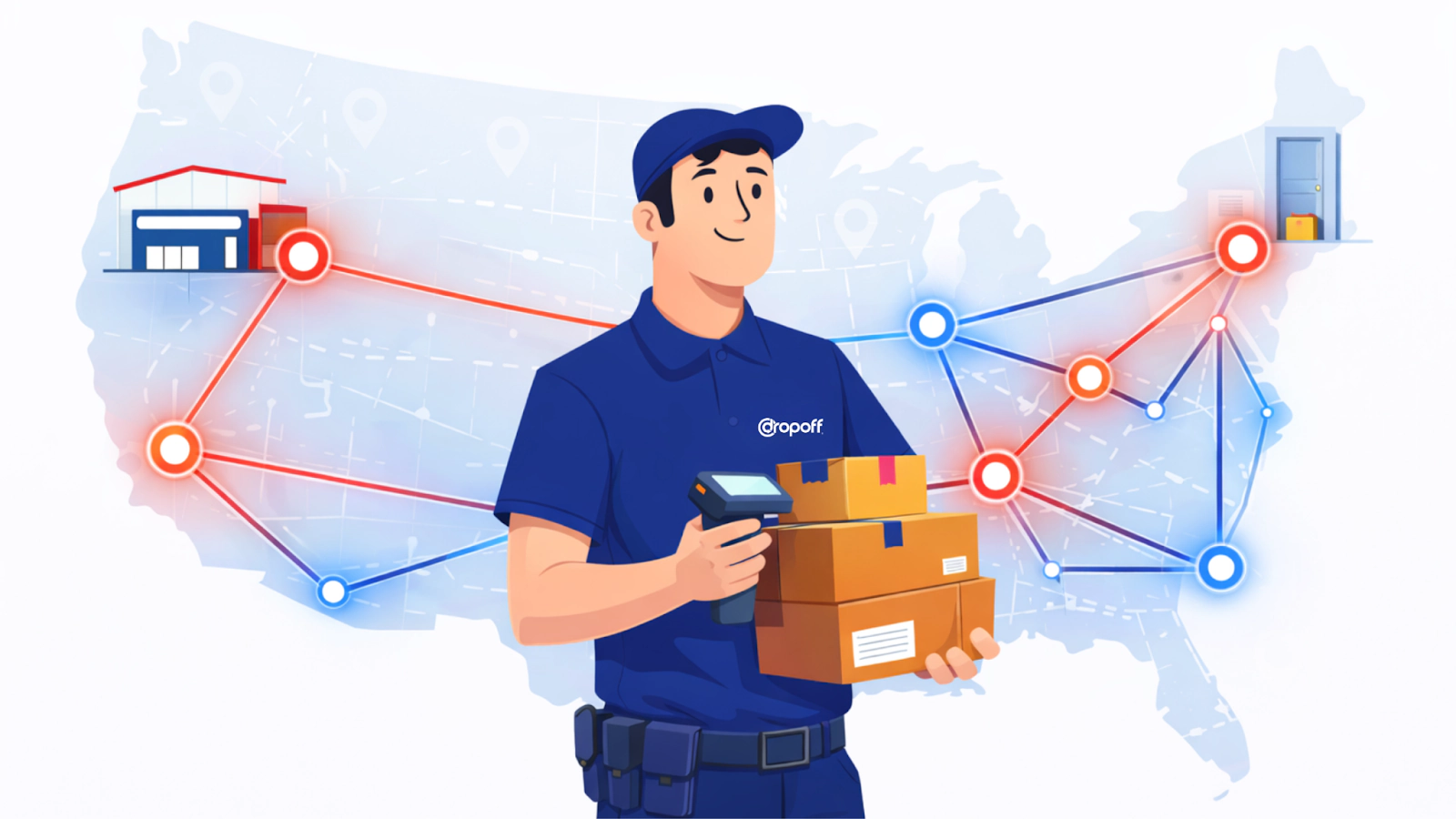
Last mile delivery in eCommerce is the final stage of fulfillment, when an order moves from a local hub, store, or micro-fulfillment site to the customer’s door. It’s the point in the supply chain where efficiency, accuracy, and experience converge into real economic impact.
Today, last mile delivery can represent more than half of total shipping costs, making it not just a tactical routing challenge but a strategic business risk for brands that want to protect margin without sacrificing customer expectations.
It’s also where brands either earn repeat customers or quietly bleed margin. Once volume scales, last mile stops being a routing problem and becomes a systems problem, combining tight delivery windows, unpredictable customer availability, route variability, exception handling, and labor volatility into the most expensive leg of fulfillment.
This guide breaks down how last mile delivery actually works, why it gets harder as brands expand, what drives true delivery cost, and how to evaluate a last mile delivery partner using operational criteria that hold up at scale.
What Is Last Mile Delivery in eCommerce?
Last mile delivery in eCommerce is the final stage of fulfillment, when an order moves from a local hub, store, or micro-fulfillment site to the customer’s doorstep. It’s the most customer-visible part of the supply chain and, in most operations, the most expensive and failure-prone.
Unlike earlier stages of fulfillment, last mile delivery concentrates complexity at the individual order level. Each stop introduces variables that don’t scale cleanly: tight delivery windows, customer availability, address accuracy, traffic conditions, and real-time exception handling. As volume grows, small inconsistencies compound into missed SLAs, rising support tickets, and margin erosion.
If first mile is about getting inventory into motion and middle mile is about moving it efficiently between nodes, last mile is where your operation becomes tangible to the customer. It’s the handoff that determines whether fulfillment feels seamless or broken—regardless of how well everything upstream performed.For a deeper breakdown of how these stages connect and why final-handoff performance is inseparable from upstream systems, see Dropoff’s guide on first mile tracking and how fulfillment visibility impacts last mile outcomes.

Why Last Mile Delivery Breaks as eCommerce Brands Scale
Early on, scrappy works. A handful of courier relationships. A spreadsheet. A customer support rep who knows every driver by name and can fix problems with a phone call.
Then volume grows. Regions expand. Service levels tighten. And last mile stops behaving like a set of tasks and starts behaving like a system under load.
What worked at low volume doesn’t fail because teams get careless. It fails because the operating model never evolved to handle scale. Three forces usually drive the breakdown.
1) Rising delivery expectations
Customers don’t benchmark your delivery experience against “similar-sized brands.” They benchmark it against the fastest, cleanest delivery they experienced recently.
As expectations rise, tolerance shrinks. Delivery windows narrow. Communication gaps feel louder. A technically on-time “two-day” delivery can still register as a broken promise if it’s vague, late in the day, or poorly communicated. At scale, perception matters as much as performance, and inconsistency gets punished quickly.
2) Fragmented carrier networks
Expansion often happens by adding carriers market by market. Coverage improves, but the operating surface area explodes.
Each provider brings different dispatch processes, different definitions of “on time,” different tracking fidelity, and different escalation paths. The result is a patchwork network that looks broad on paper but behaves unpredictably in practice. As coverage expands, consistency collapses.
3) Limited visibility and accountability
When something goes wrong, most brands don’t lack effort. They lack ownership.
Late handoffs, bad addresses, missed windows, or customer-not-available events often fall between systems. OMS says one thing. Carrier tracking says another. Customer support becomes the translator and the fixer. This creates operational fog: no single party owns the outcome end to end, so your internal team absorbs the work.
If “exceptions” show up repeatedly in your week, that’s a signal your last mile setup isn’t failing randomly. It’s failing structurally. Dropoff’s explainer on delivery exceptions and how to handle them pairs well with a tracking strategy that goes beyond “label created” and into real operational control.
Why Last Mile Delivery Is the Most Expensive Part of eCommerce Fulfillment
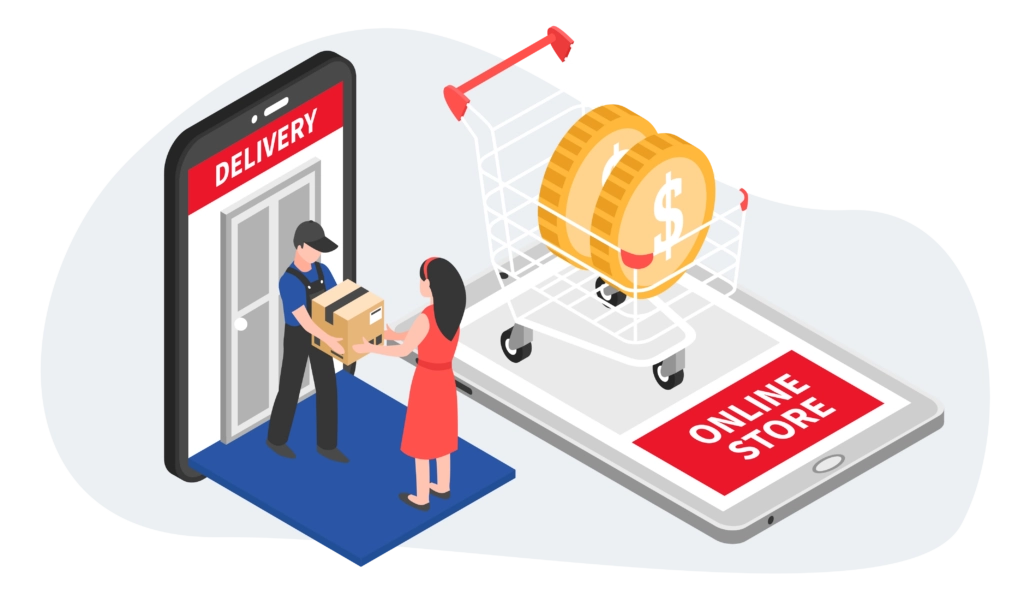
Last mile delivery costs don’t spike because teams suddenly get bad at logistics. They spike because last mile is structurally inefficient unless the operation is deliberately designed around its constraints.
Unlike earlier stages of fulfillment, last mile concentrates cost at the individual order level. Every stop is its own plan. Every exception interrupts a route. And every failure ripples across drivers, systems, and customer support. As volume grows, those frictions don’t average out, they compound.
What actually drives last mile delivery cost
Delivery density and cost per stop
Cost per stop improves when deliveries are clustered, routes repeat, and demand is predictable. It degrades quickly when orders are scattered, tightly time-windowed, or too low-volume to build efficient routes. Low density turns fixed labor and vehicle time into variable loss.
Failed first delivery attempts
Every failed attempt triggers a second route, a second driver touch, and usually a customer support interaction. Multiply that across regions and the impact isn’t just higher cost, it’s reduced planning stability. Routes get disrupted, labor assumptions break, and downstream performance becomes harder to forecast.
Returns and reverse logistics
Returns aren’t just “shipping in reverse.” They introduce handling time, restocking workflows, inventory reconciliation, and customer communication. When returns are slow or poorly tracked, they quietly erode trust and working capital. If return volume is climbing, Dropoff’s guide to returns management can help map where cost and delay are actually accumulating.
Hidden costs most pricing models ignore
A quoted delivery rate rarely reflects the full economic impact of last mile performance. Many of the most expensive costs never appear on a carrier invoice.
WISMO tickets (“Where is my order?”)
When tracking is vague or event-poor, customer support becomes the tracking layer. That cost shows up as headcount, tooling, and time spent answering questions that should have been resolved operationally.
Refunds and replacements
Late or missing deliveries don’t just result in refunds. They trigger reshipments, expedited make-goods, and retention offers. Each failure increases the cost of keeping a customer you already paid to acquire.
Brand damage from late deliveries
This is the quietest cost and often the largest. Late or unreliable delivery turns into negative reviews, churn, and higher acquisition costs over time. Research from Baymard and similar checkout-focused studies consistently shows how sensitive customers are to fulfillment friction and unexpected costs, especially at the point of conversion.
Why national expansion often increases cost instead of reducing it
In theory, scale should lower unit cost. In last mile delivery, it often does the opposite when expansion is stitched together instead of orchestrated.
Multi-vendor sprawl
One market becomes three providers. Three markets become ten. Suddenly you’re managing a vendor ecosystem instead of a delivery operation. Each new carrier adds process variance, reporting gaps, and coordination overhead.
Inconsistent SLAs
Different definitions of “on time,” different scan events, different proof-of-delivery standards. When metrics aren’t consistent, performance can’t be compared or improved systematically.
Loss of operational control
Without real-time visibility, teams can’t prevent outcomes, only respond to them. Apologies replace intervention. Support absorbs work that should have been handled upstream.
If your internal debate keeps circling around “we need more carriers,” it may help to reframe the problem as “we need a system that makes carriers behave like one network.” That distinction between aggregation and orchestration is where last mile economics start to change.
How Last Mile Delivery Works In E-Commerce (Step-by-Step)
A clean last mile process isn’t complicated. It’s disciplined. The difference between a delivery operation that scales and one that collapses under volume is how consistently these steps are executed and owned.
From order release to proof of delivery
1) Order routed
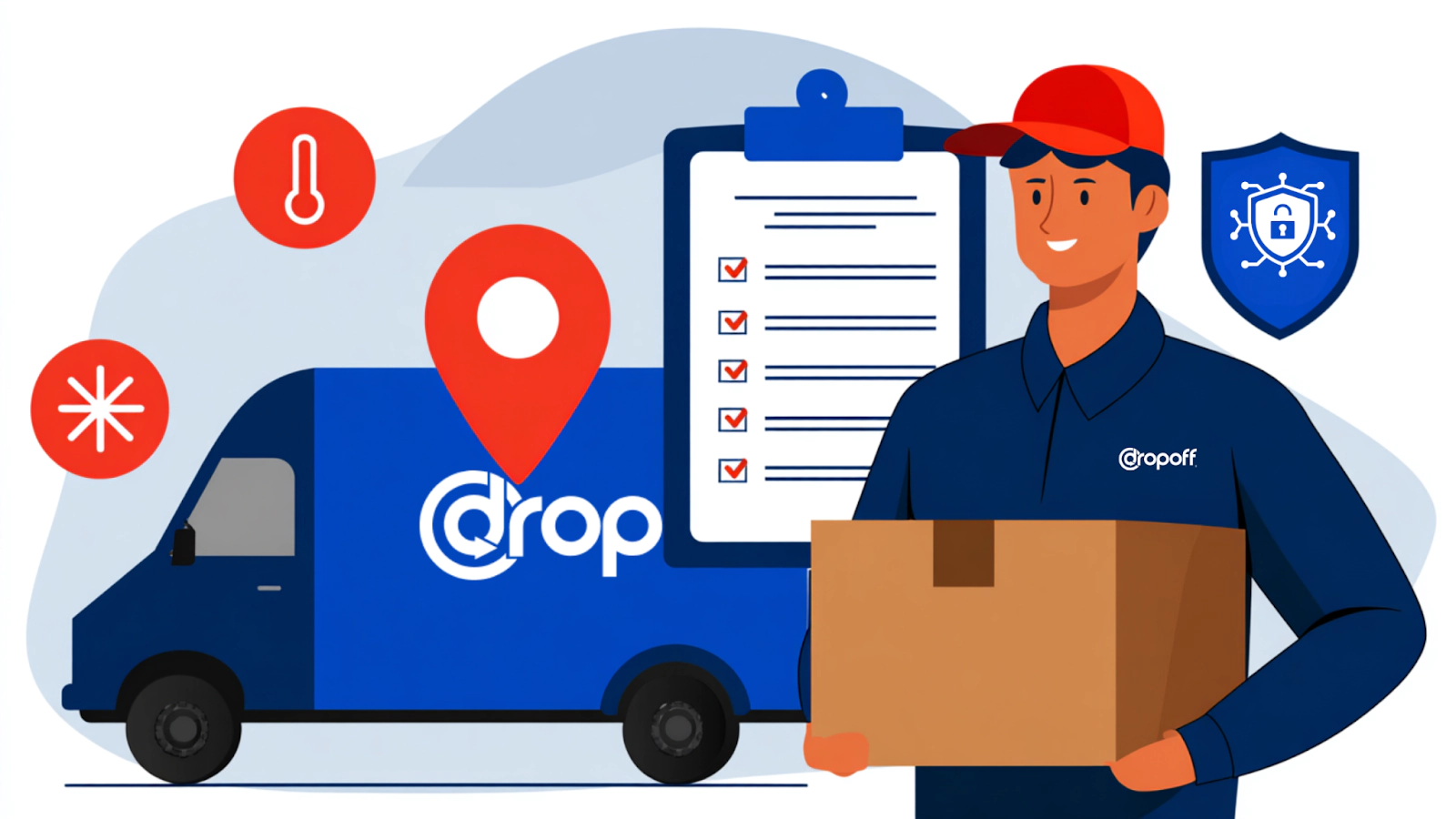
The order is released from your OMS, WMS, or store and routed based on service level, geography, capacity, cutoff times, and special handling requirements such as signature capture, temperature control, or high-value items.
At scale, routing is not a static ruleset. It’s a decision point that determines whether the order enters the network with realistic expectations or bakes in failure from the start.
2) Carrier dispatched
A driver is assigned, the route is built or updated, and pickup is scheduled. Strong operations treat dispatch as a live decision, not a morning plan that stays frozen while traffic, volume, and capacity change throughout the day.
This is where many systems fall behind reality. When dispatch can’t adapt, exceptions become inevitable downstream.
3) Delivery attempted
The driver completes the stop within the promised window and captures key delivery events: arrival, handoff, photo, signature, and timestamps.
If the customer isn’t available or conditions aren’t met, the system needs predefined rules. Reattempt, hold, return, or alternate drop locations should be decisions made by policy, not improvisation. Consistency here is what protects both customer trust and driver efficiency.
4) Exception resolved
Exceptions should trigger ownership, not finger-pointing.
Who contacts the customer? Who confirms the address? Who decides between reattempt and return? In many multi-carrier setups, this is where performance breaks down. Escalation chains stretch across systems and vendors, slowing resolution and pushing work onto internal teams.
A scalable last mile operation resolves exceptions quickly because ownership is clear and escalation paths are short.
5) Proof of delivery captured
Proof of delivery is the record that protects your margins and your reputation. It should include photos, signatures, timestamps, geolocation data, and chain-of-custody documentation when required.
Proof isn’t just compliance. It’s how disputes are resolved, refunds are prevented, and performance is verified. For a deeper look at what strong proof of delivery includes and why it matters operationally, see proof of delivery and what it should include.If you want a visual overview of how this process operates in practice, the How It Works page outlines Dropoff’s operational flow without burying the mechanics in jargon.
Common Last Mile Delivery Challenges for eCommerce Brands
These problems show up in “People also ask” for a reason. They’re widespread, costly, and often symptomatic of deeper operational friction — not just isolated hiccups.
Meeting same-day and next-day delivery expectations
Customers increasingly expect fast delivery, but speed without predictability is worthless. Roughly 66% of consumers now expect same-day delivery, and nearly all say delivery quality impacts brand loyalty.
The challenge isn’t only speed. It’s predictability — cutoff times, driver availability, traffic and weather variability, and exception handling. When “tomorrow” becomes “sometime tomorrow,” customers perceive a broken system, even if the promise is technically met.
Managing multiple carriers and inconsistent service levels
Many brands don’t intentionally choose multi-carrier complexity — they inherit it through expansion. But with each added provider comes divergent processes, tracking fidelity, SLA definitions, and escalation paths.
This fragmentation collides with another big cost driver: up to 53% of total delivery costs happen in last-mile logistics, so inconsistencies don’t just erode quality — they erode margin.
Maintaining real-time visibility and exception ownership
Visibility isn’t “a tracking link.” Visibility is the ability to answer:
- Where is the order right now?
- What’s the next expected scan/event?
- If it misses the window, who is fixing it?
Dropoff’s guide on supply chain visibility is a solid primer if your tracking data exists but doesn’t translate into control.
Returns, failed deliveries, and customer trust erosion
Returns are no longer a back-office workflow — they’re part of the customer experience. Failed deliveries are costly: research suggests failed deliveries account for roughly 10% of packages and often require re-delivery, which inflates cost and damages satisfaction.When returns are slow, unclear, or mis-scanned, customers don’t blame “reverse logistics.” They blame your brand. That erosion of trust gets priced back into acquisition costs and churn, long after the delivery has been completed.
Last Mile Delivery Models Explained (In-House vs Outsourced)
There isn’t one universally “right” last mile delivery model. There’s the model that aligns with your service promises, margin tolerance, geographic footprint, and operational maturity. Most failures happen not because a model is wrong in theory, but because it’s misaligned with how the business actually operates at scale.
In-house last mile delivery
Running last mile delivery internally can be powerful when the conditions are right. It offers control, proximity, and the ability to shape the customer experience directly.
When it works
- High delivery density within a limited geographic area
- Predictable demand with repeat routes
- Strong operations leadership and dispatch discipline
- A need for deep brand control, such as white-glove or premium handoff experiences
Under these conditions, in-house delivery can be efficient, consistent, and brand-defining.
Where it breaks
- Expansion beyond a small number of regions
- Seasonal spikes that require rapid, flexible capacity
- Driver churn and training inconsistency
- Technology gaps in routing, live tracking, and exception workflows
As scale increases, complexity rises faster than most internal teams expect. What looks cheaper on a per-delivery basis often becomes expensive once fully loaded costs are accounted for, including labor, vehicles, insurance, compliance, technology, and management overhead.
Outsourced last mile delivery for eCommerce
Outsourcing last mile delivery shifts operational burden to a partner, but it doesn’t eliminate responsibility for outcomes. It changes where complexity lives.
Benefits and tradeoffs
- Faster access to capacity and geographic coverage
- Reduced internal overhead for hiring, training, and compliance
- Technology and tooling that would be difficult to justify building in-house
The tradeoff is structural: you’re not just selecting a vendor, you’re selecting an operating extension of your brand. Your customer experience will reflect the partner’s discipline, systems, and accountability.
What brands often underestimate
- The amount of internal time spent coordinating, auditing, and escalating across multiple providers
- How quickly a “cheapest rate” becomes the most expensive option once exceptions, support tickets, and churn are counted
- How difficult it is to maintain consistent SLAs across markets without a unified operational layer
Outsourcing succeeds when it simplifies operations, not when it merely shifts complexity from one inbox to another.
Multi-carrier delivery vs. orchestrated networks
As brands expand, many adopt a multi-carrier approach to extend coverage. The intent is flexibility. The outcome is often fragmentation.
Why aggregation without orchestration fails
“Multi-carrier” typically means more options, not more control. When each carrier operates differently, brands inherit:
- fragmented processes
- inconsistent service levels
- inconsistent data
- unclear accountability
Without a common operating standard, performance becomes harder to measure and even harder to improve.
Why accountability matters more than coverage
Coverage is table stakes. Accountability is the differentiator.
Orchestration means operating with a single standard across markets: consistent SLAs, shared exception rules, unified visibility, and clear ownership when things go wrong. When carriers behave like one network instead of many disconnected ones, last mile performance becomes predictable, scalable, and improvable.
When Should eCommerce Brands Outsource Last Mile Delivery?
Outsourcing last mile delivery isn’t a growth milestone. It’s a signal that your current operating model is starting to tax the business more than it supports it.
Most brands don’t outsource because they want to. They do it because the cost of holding everything together internally has become visible in margins, customer experience, and team burnout.
Signs your current model is costing you growth
Rising cost per delivered order
This isn’t about negotiated rates. It’s about true cost per delivery, once you account for reattempts, refunds, replacements, customer support time, and churn. When those costs rise faster than volume, your last mile model is no longer scaling.
Delivery-driven churn
When retention teams spend their time apologizing for late or failed deliveries, last mile stops being an operational issue and becomes a revenue problem. At that point, delivery performance is shaping customer lifetime value whether you’re measuring it or not.
Ops teams stuck firefighting
When your strongest operators spend their week chasing exceptions, coordinating vendors, and filling visibility gaps, you don’t have an ops team. You have an apology desk. That’s usually the clearest signal that the system itself needs to change.
If cost pressure is the forcing function, Dropoff’s breakdown of last mile delivery costs and how to reduce them can help quantify what’s actually driving spend before you make a structural decision.
Cost vs. control is a false tradeoff
Many brands assume:
- In-house equals control
- Outsourced equals less control
In practice, the opposite is often true.
The right partner can increase control by introducing:
- real-time visibility across markets
- standardized operating processes
- clear exception ownership
- consistent service levels, regardless of geography
Control doesn’t come from owning every task. It comes from being able to see what’s happening, intervene early, and hold someone accountable for outcomes.
Ownership isn’t control. Visibility is control.
What to Look for in a Last Mile Delivery Partner
Most last mile providers sound similar on paper. The difference shows up in how they behave under pressure. This checklist focuses on the indicators that actually predict performance at scale.
Reliability over speed
Speed sells. Reliability keeps customers.
Fast delivery means little if it’s inconsistent by market or fragile under volume. Look past headline service levels and ask for proof of repeatable execution.
Strong signals include:
- on-time performance measured by market, not averages
- documented exception processes with clear ownership
- operational escalation paths that don’t rely on personal relationships or ad hoc fixes
If performance depends on “knowing the right person,” it won’t survive scale.
Real-time tracking and exception ownership
Tracking should be event-rich and operationally useful, not a vague progress bar designed for reassurance.
A strong partner can explain, in plain language:
- what happened
- why it happened
- what they did about it
- what will change to prevent it from happening again
That last point matters most. Visibility without ownership just moves problems faster. Tracking only creates value when it drives intervention and improvement.
Consistent SLAs across markets
If your SLA changes by city, your customer promise changes by city.
Consistency requires more than contracts. It requires:
- standardized operating procedures
- uniform metrics and definitions
- shared tooling across markets
- centralized accountability when performance slips
Without a common operating layer, expansion multiplies variance instead of capacity.
Experience with time-critical delivery
Many providers can move boxes. Fewer can deliver when timing, custody, and failure tolerance matter.
Experience with time-critical delivery is a proxy for operational discipline. It shows up in:
- chain-of-custody thinking
- faster exception response
- clearer escalation paths
- built-in redundancy when plans break
These capabilities translate directly into eCommerce reliability, especially as delivery windows tighten and customer tolerance shrinks.
Same-Day Delivery and the Future of Last Mile in eCommerce
Same-day delivery is no longer a marketing flex. It’s becoming a baseline expectation in dense markets. But faster service levels don’t fix the core failure modes of last mile delivery. They expose them.
When exception handling is weak, same-day doesn’t solve problems. It simply fails faster. Missed cutoffs, unclear ownership, and vague tracking become more visible, not less. Speed compresses tolerance. There’s less time to recover, explain, or smooth over mistakes.
The brands that actually win on speed don’t do it by promising more. They do it by operating tighter. Dispatch decisions stay live throughout the day. Cutoff logic reflects real capacity, not optimistic assumptions. Customer communication is proactive rather than apologetic. Proof of delivery is reliable enough to close the loop quickly when something goes wrong.
Orchestration, data, and real-time decisioning
The future of last mile delivery isn’t more carriers. It’s better coordination.
That means routing that adapts to live conditions instead of static plans. Standardized exception rules that don’t change by provider or city. Fewer handoffs between disconnected systems. And unified performance reporting that teams can actually use to improve outcomes, not just explain failures after the fact.
Pressure on urban last mile delivery is only increasing. The World Economic Forum has projected significant growth in last-mile delivery volume in cities over the coming decade, alongside rising congestion and emissions if operating models don’t evolve. Faster delivery in constrained environments raises the stakes for discipline, not shortcuts.
What healthcare logistics teaches eCommerce brands
Healthcare logistics is a useful mirror because it treats failure as unacceptable, not inconvenient.
Every handoff is documented. Proof of delivery isn’t optional. Chain of custody is assumed, not debated. When timing matters, escalation paths and exception playbooks can’t be improvised in the moment. They have to exist before something goes wrong.
That zero-failure mindset forces stronger processes upstream. It prioritizes clarity over speed claims and ownership over optimism. For eCommerce brands navigating tighter delivery windows and shrinking customer tolerance, those lessons translate directly.
Seeing how these standards operate in practice helps clarify what “time-critical” actually demands at scale.
How Dropoff Supports Scalable Last Mile Delivery for eCommerce
Dropoff is built for last mile delivery environments where reliability matters and growth introduces real operational complexity. The focus isn’t on adding speed for its own sake, but on building a delivery system that stays predictable as volume, regions, and service expectations expand.
One accountable partner across markets
As brands scale, last mile often fractures into a patchwork of local providers. Each market operates slightly differently. Each exception takes longer to resolve. Accountability blurs.
Dropoff replaces that fragmentation with a unified operating standard and a single point of ownership across markets. That structure matters most during periods of rapid expansion, when issues need fast resolution and consistency becomes harder to maintain. Instead of managing vendors, brands manage outcomes.
Same-day delivery built for reliability, not hype
Same-day delivery only works when dispatch, visibility, and exception handling are treated as core operations rather than add-ons. Without that discipline, faster service levels simply amplify failure.
Dropoff’s approach to same-day delivery is designed around live decisioning, real-time visibility, and clear ownership when plans change. Service levels are mapped to what the operation can reliably support, helping brands balance speed promises against margin and customer experience.
Applying healthcare-grade logistics to eCommerce fulfillment
Dropoff’s background in healthcare logistics shows up in the operational details. Proof of delivery is rigorous. Chain-of-custody thinking is embedded. Exception management is structured rather than reactive.
Healthcare treats failure as unacceptable, not inconvenient. That mindset translates directly to eCommerce environments where delivery windows are tightening and tolerance for inconsistency is shrinking. The result is a last mile operation designed to hold up under pressure, not just perform well in ideal conditions.
For brands evaluating fit, mapping service options against current delivery costs, exception volume, and customer impact provides a clearer signal than headline promises alone.
FAQs
Last mile delivery in eCommerce is the final stage of fulfillment, when an order moves from a local hub, store, or distribution point to the customer. It’s the most customer-visible part of the supply chain and often the most expensive, because execution happens at the individual-stop level rather than in bulk. This is where delivery promises become real, and where small operational failures are immediately felt by the customer.
Last mile delivery is expensive because the work is fragmented into thousands of time-windowed, customer-specific deliveries. Cost rises when delivery density is low, first attempts fail, returns increase, and customer support has to compensate for gaps in visibility. Unlike upstream fulfillment, inefficiencies in last mile don’t average out at scale. They compound.
At a high level, the process is simple: the order is routed, a driver is dispatched, delivery is attempted, exceptions are resolved, and proof of delivery is captured.
What determines success isn’t the sequence, but the discipline. Real-time visibility, clear exception ownership, and reliable proof of delivery are what turn this flow into a scalable operation rather than a constant firefight.
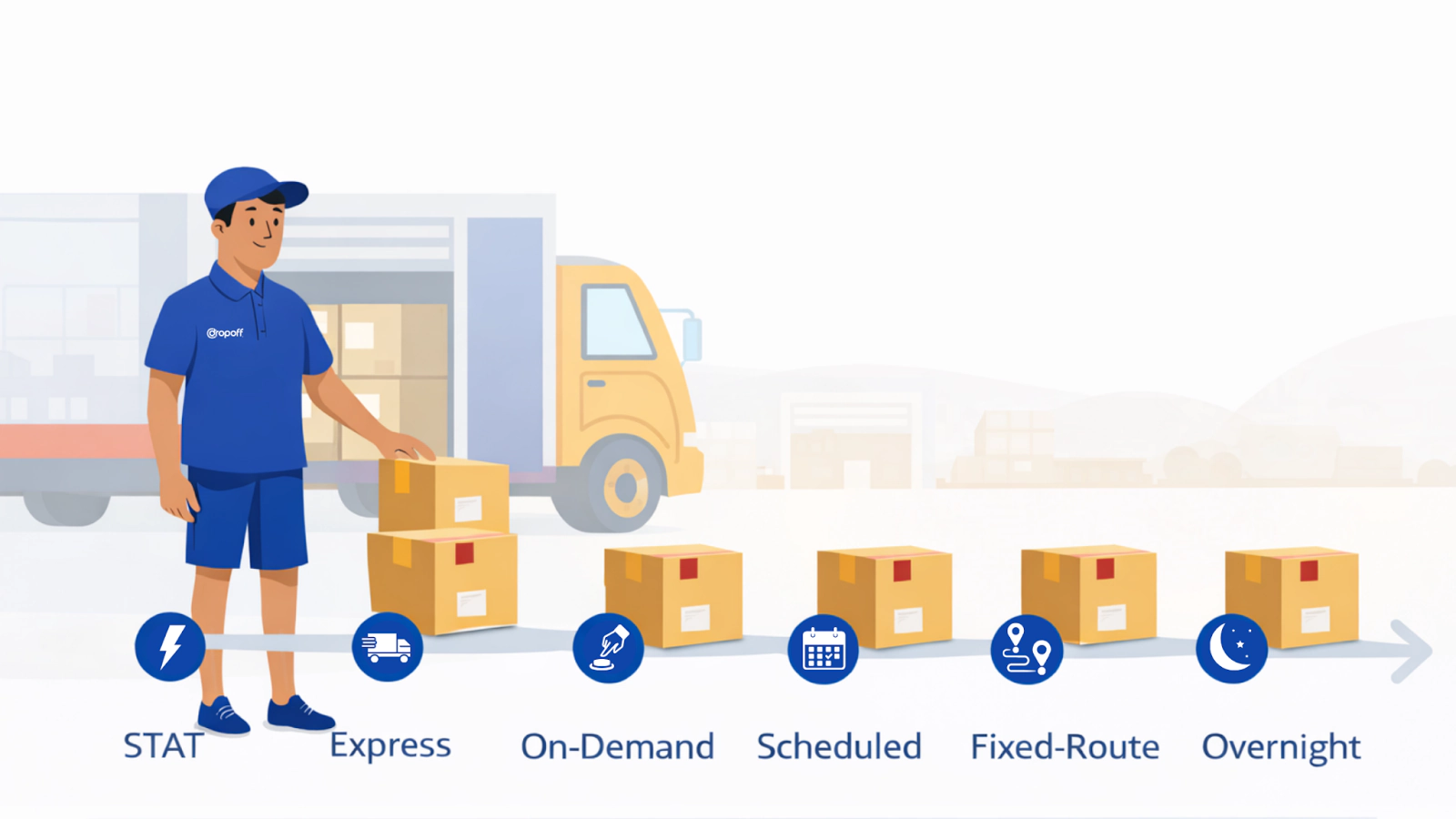
It depends on service level and network design. Same-day delivery can mean hours from order release, while next-day delivery depends on cutoff times, capacity, and route structure.
The more important question isn’t “how long,” but “how predictable.” Unpredictability is what drives customer tickets, refunds, and churn, even when deliveries technically meet their promised window.
Many brands evaluate outsourcing when expansion or service-level commitments outgrow what an in-house team can reliably manage.
Common signals include rising cost per delivered order, exception volume consuming ops time, and the complexity of managing multiple carriers with inconsistent performance. Before deciding, it’s worth calculating fully loaded in-house costs, including labor, vehicles, technology, and support overhead, not just per-delivery rates.
The best solution is the one that delivers consistent performance, real-time visibility, and uniform service levels across markets without multiplying vendor complexity.
When building a shortlist, reliability, exception ownership, and tracking quality tend to predict outcomes better than promised speed or headline pricing.