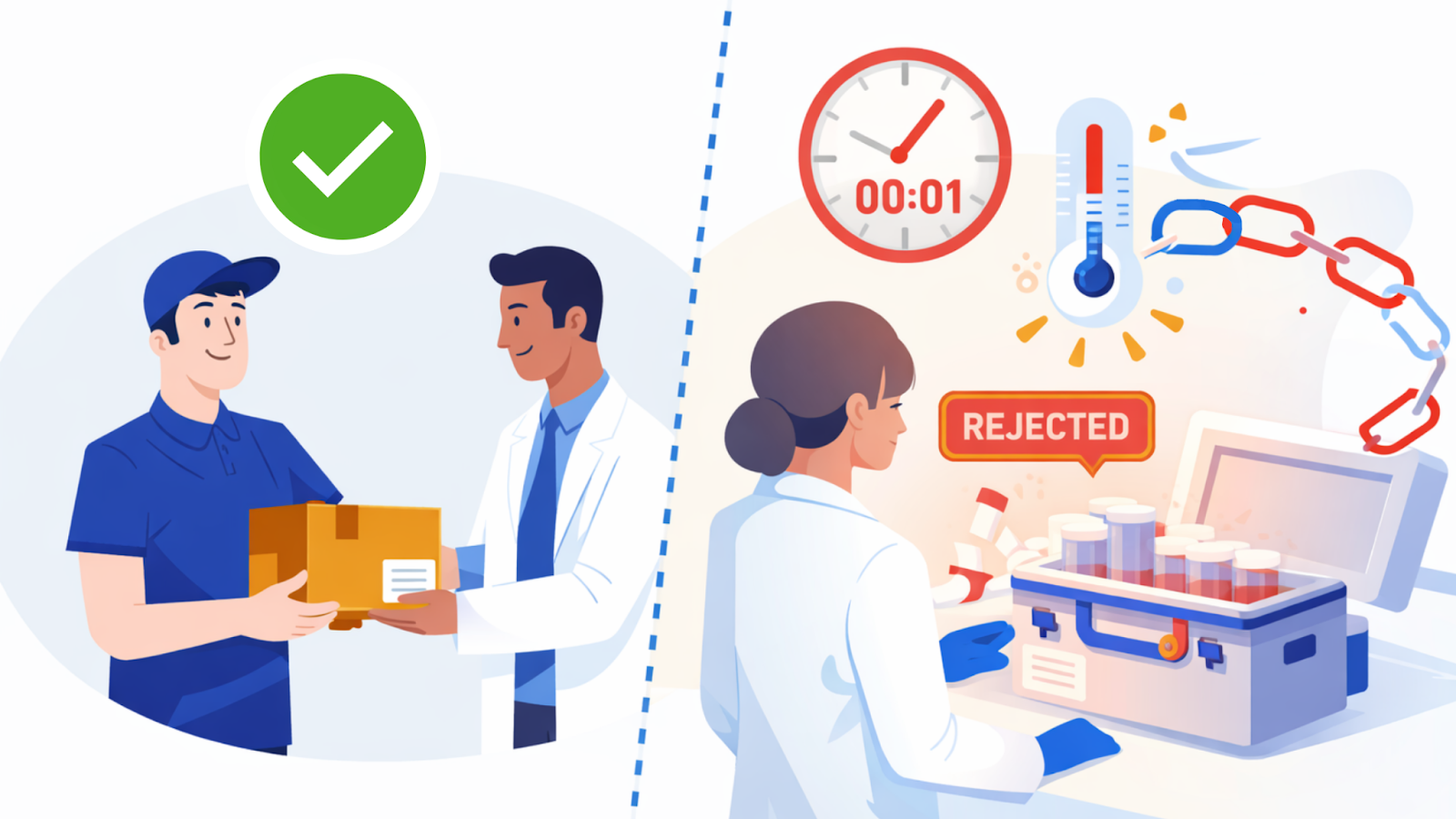
How to Become a Medical Courier in 2026

If you want to know how to become a medical courier, the first step is understanding that this role is more specialized than standard delivery work. Medical couriers transport lab specimens, prescription medications, medical records, and other healthcare materials that often require careful handling, secure handoffs, and on-time delivery. This guide explains what medical couriers do, the requirements and training many companies look for, how pay typically works, and what to expect when applying for medical courier jobs. Quick answer: how to become a medical courier
To become a medical courier, you typically need a valid driver’s license, a reliable insured vehicle, a clean driving record, and the ability to handle time-sensitive deliveries professionally. Some roles also require HIPAA training, bloodborne pathogens training, or other employer-specific onboarding depending on the healthcare materials being transported.
What Is a Medical Courier?

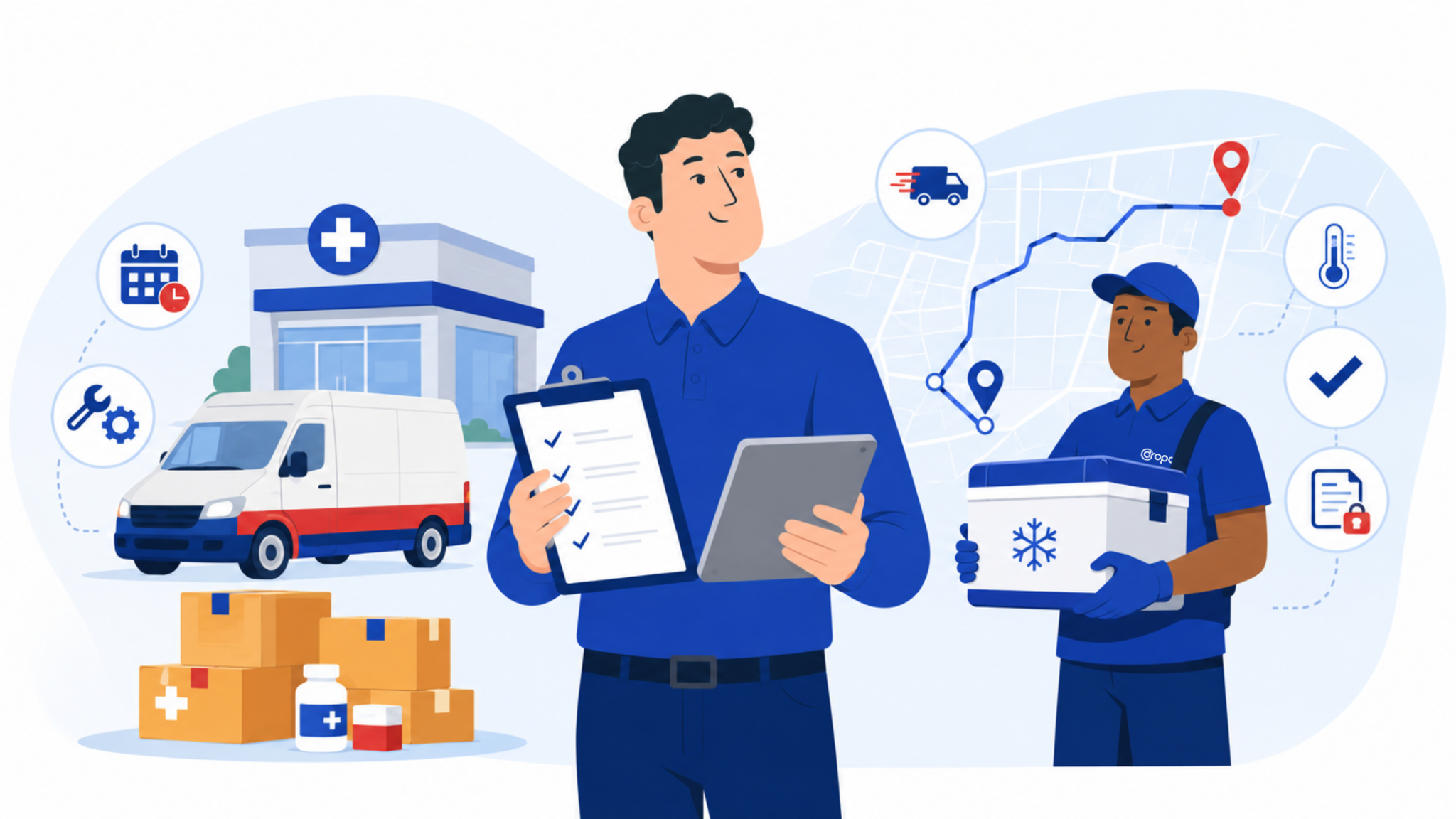
A medical courier is a delivery professional who transports healthcare-related items between hospitals, labs, pharmacies, clinics, providers, and sometimes patients. Depending on the route, those deliveries may include biological samples, blood products, prescription medications, medical records, medical supplies, or diagnostic materials.
What makes this role different from standard delivery work is the level of care involved. Medical deliveries are often tied to lab cutoffs, treatment schedules, privacy requirements, and documented handoffs. A delayed or mishandled delivery can affect testing timelines, disrupt treatment, or create compliance issues.
That is why medical courier work fits more closely within healthcare logistics than ordinary parcel delivery. More specialized services such as biological sample courier services and blood courier services show how sensitive and time-critical these deliveries can be.
What Does a Medical Courier Do?
A medical courier picks up, transports, and delivers healthcare items while following route instructions, handling procedures, timing requirements, and documentation standards. The day-to-day work depends on the route and the clients you support, but the core responsibilities are usually consistent.
Medical couriers may deliver to or from:
- hospitals
- laboratories
- pharmacies
- clinics
- surgery centers
- long-term care facilities
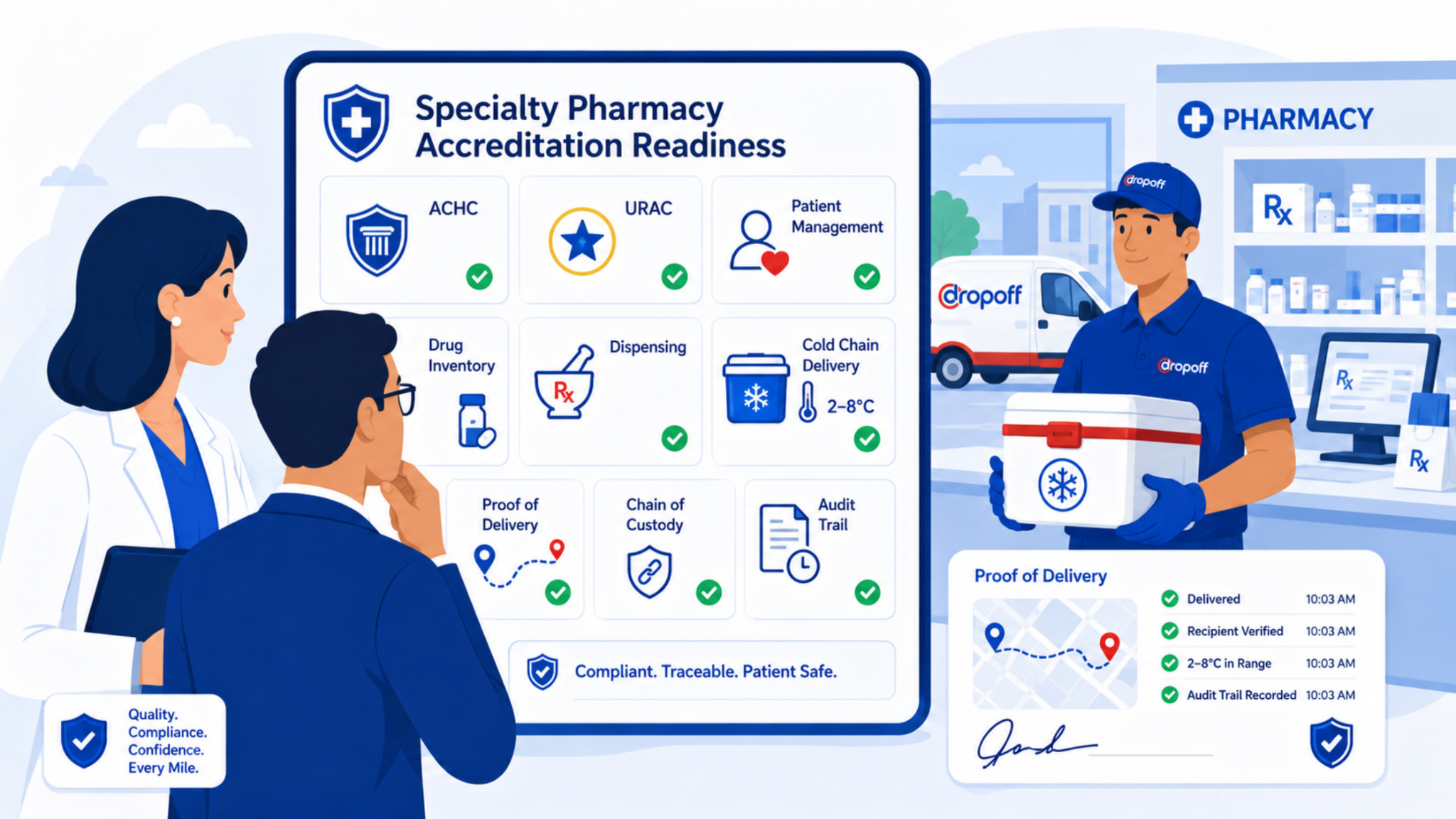
In practice, that can mean picking up a specimen from a clinic, delivering medications to a pharmacy, or transporting records or supplies between healthcare locations. Some routes are simple. Others involve multiple stops, strict delivery windows, or materials that require more careful handling in transit.This is one of the biggest differences between medical courier work and standard delivery work. A medical courier is often stepping into an existing chain of custody. That means the delivery itself is only part of the job. In environments like hospital courier services and lab courier services, timing, accuracy, and proper handoff matter just as much as speed.
Requirements to Become a Medical Courier
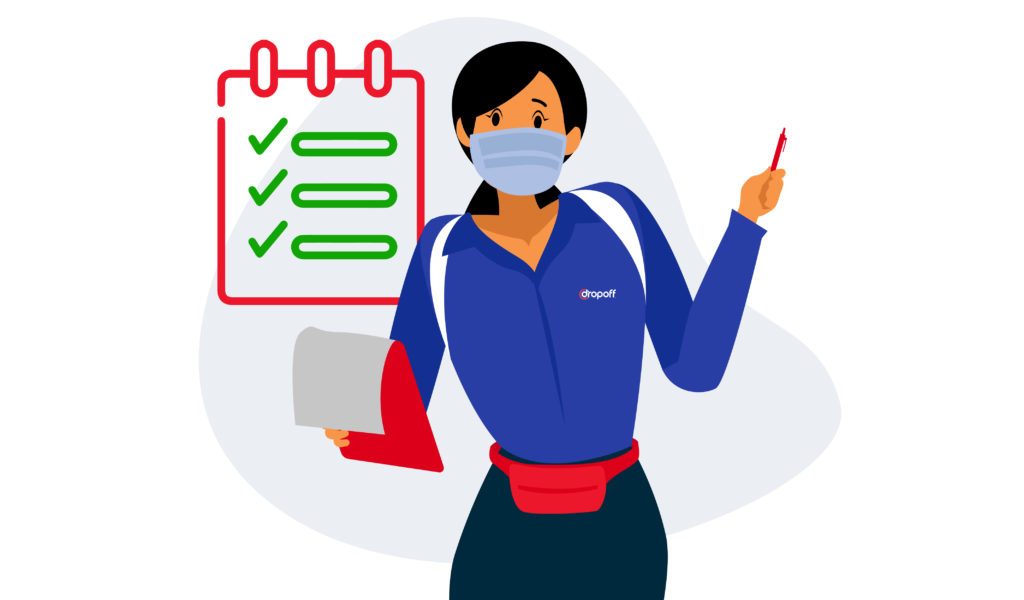
There is no single national checklist for every medical courier job, but most roles start with a familiar set of baseline requirements.
In many cases, employers look for drivers who:
- are at least 21 years old
- have a valid driver’s license
- have a clean driving record
- have a reliable, insured vehicle
- are comfortable using a smartphone and delivery apps
- can navigate their local area efficiently
Some companies may also require a background check, proof of registration and insurance, a vehicle inspection, the ability to lift certain weights, or availability for specific route windows.
You do not usually need to be a nurse, pharmacist, or medical assistant to become a medical courier. In most cases, employers care more about reliability, professionalism, communication, and the ability to follow process in time-sensitive situations. Healthcare or delivery experience can help, but many roles are open to drivers who are new to the field and willing to complete the required training.
Do You Need Certification to Be a Medical Courier?
One of the most common questions about this career path is whether you need a medical courier certification.
The answer is: not always. There is no single universal certification required for every medical courier job. In practice, training requirements vary based on the company, the client, and the type of healthcare materials being transported. What is common is role-specific training tied to privacy, safety, and handling procedures.
For many medical courier roles, that training may include:
- HIPAA and privacy training
- Bloodborne Pathogens training
- employer-specific onboarding
- route, documentation, and handling procedure training
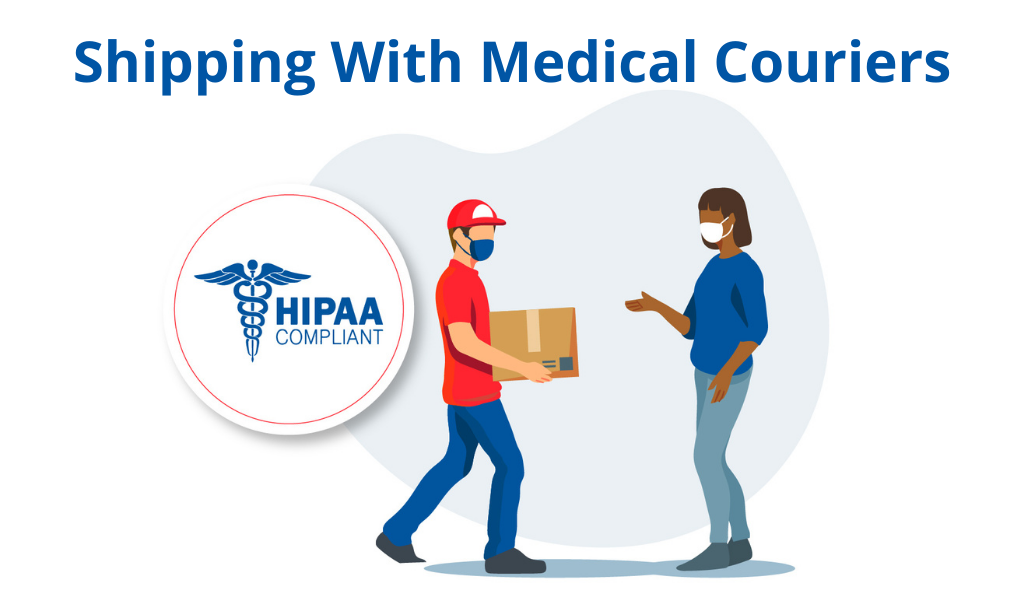
At Dropoff, many healthcare clients require couriers to complete HIPAA and bloodborne pathogen certifications. That reflects the company’s broader focus on regulated healthcare delivery. The expectations around HIPAA compliance for medical couriers and the procedures involved in transporting blood and specimens help explain why that training matters.For the external compliance layer, HIPAA training and resources from HHS, Privacy Rule guidance, and OSHA’s bloodborne pathogens standard provide helpful context for the kinds of training healthcare-facing courier roles may involve.
How to Become a Medical Courier: Step by Step
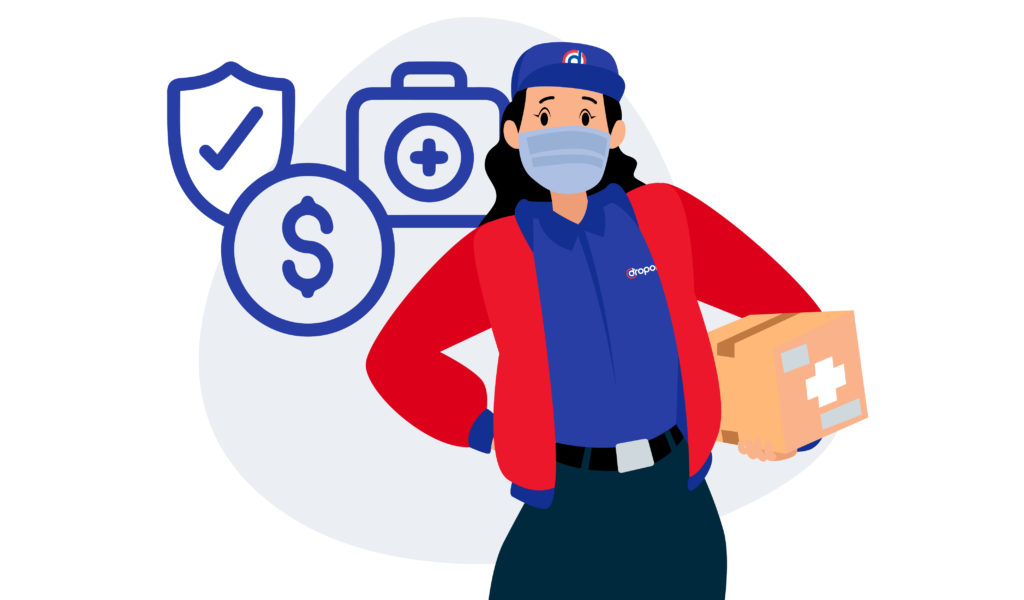
If you want the clearest answer to how to become a medical courier, the process is usually straightforward: meet the basic requirements, get your documents and vehicle ready, complete any required training, apply to companies with healthcare delivery experience, and be prepared to show that you can handle time-sensitive work professionally.
1. Make sure you meet the basic requirements
Start with the fundamentals. Most medical courier jobs require a valid driver’s license, a clean driving record, an insured vehicle, comfort using a smartphone and delivery apps, and availability for the routes you want to take.
2. Get your documents and vehicle ready
Before you apply, make sure your license, vehicle registration, proof of insurance, and any other required documents are current and ready to submit. Your vehicle should also be clean, dependable, and in good working condition.
3. Complete any required training
Some employers require training before you begin taking medical courier assignments. Depending on the role, that may include HIPAA training, bloodborne pathogens training, and company-specific process training. OSHA requires bloodborne pathogens training for employees with occupational exposure at the time of initial assignment and at least annually after that.
4. Apply to medical courier companies with healthcare experience
Not every courier company is equipped for healthcare logistics. A stronger medical courier opportunity usually comes from a company that already understands hospitals, labs, pharmacies, and other healthcare workflows. Look for clear onboarding, route structure, support when exceptions happen, and signs that the company treats the work as more than a basic pickup-and-drop-off service.
A company’s approach to medical courier best practices can be a useful signal here.
5. Prepare for screening and interviews
Expect employers to ask about reliability, communication, lifting ability, traffic delays, damaged packages, and what you would do if a pickup were not ready. They are usually evaluating judgment, professionalism, and your ability to follow process under pressure.
6. Start with the right expectations
Medical courier work can offer flexibility and independence, but it also demands punctuality, documentation, and consistent execution. That combination is exactly what makes the role appealing to some drivers and a poor fit for others.
How Much Do Medical Couriers Make?
Medical courier pay varies by market, route type, and work structure. A medical courier salary can look very different depending on where you work, whether the role is contractor-based or employee-based, and how the routes are structured.
Some of the biggest factors that affect earnings include:
- city and local demand
- contractor vs employee structure
- delivery volume
- route consistency
- distance and mileage
- specialized healthcare routes
- whether the work is scheduled, on-demand, or both
For role-specific context, Glassdoor currently estimates the average U.S. medical courier salary at about $45,656 per year. For broader labor-market context, the Bureau of Labor Statistics publishes wage data for couriers and messengers as a wider occupational category.
That is why it helps to ask practical questions before accepting a job. How is pay calculated? Is work steady? Are routes consistent? Are expenses reimbursed? What kind of healthcare deliveries does this market actually support?
A good opportunity is not just about the pay number on paper. It is also about consistency, route quality, and how clearly expectations are communicated.
Skills That Help Medical Couriers Succeed
The strongest medical couriers are not usually the flashiest people on the route. They are the most dependable.
Organization and route discipline matter because healthcare deliveries often involve timing windows, multiple stops, and documented steps.
Attention to detail matters because a wrong handoff, missing scan, or incomplete record can create downstream problems for labs, pharmacies, clinics, or patients.
Communication matters because delays, unready pickups, and traffic issues need to be reported quickly, not discovered after the route has already slipped.
Professionalism and discretion matter because medical courier work can involve sensitive information, controlled workflows, and direct interaction with healthcare staff.
Calm problem-solving matters because not every route goes according to plan. Pickups may be delayed, traffic may change timing, and handoff issues may need to be handled without creating bigger problems.Those same qualities also show up in discussions around the must-have features of a medical delivery service, which offers a useful view of what healthcare organizations value on the other side of the route.
Common Medical Courier Interview Questions
If you apply for a medical courier job, expect interview questions that test more than whether you can drive. Employers are usually trying to understand how you handle pressure, follow process, communicate when something changes, and protect sensitive deliveries.
Here are some common medical courier interview questions and what employers are really evaluating.
Are you able to lift and carry up to 50 pounds?
This helps employers understand whether you can handle the physical side of the job, especially on routes that include medical supplies, equipment, or heavier deliveries.
What would you do if traffic might make you late?
This question is usually less about traffic and more about judgment. Employers want to know whether you would communicate early, stay calm, and take the right steps when timing is at risk.
What would you do if a package were damaged during transit?
This helps show whether you are likely to follow procedure, report the issue immediately, and avoid creating a bigger problem by improvising the wrong solution.
What would you do if a pickup were not ready when you arrived?
This is a common real-world scenario in courier work. Employers want to know whether you can handle delays professionally, communicate clearly, and keep the rest of the route moving as smoothly as possible.
How would you handle confidential information?
Medical courier work can involve protected health information, medical records, or sensitive deliveries. Employers want to see that you understand the importance of privacy, discretion, and following procedure.
In most cases, strong interview answers come down to the same qualities: reliability, professionalism, communication, and the ability to stay steady when conditions change.
How to Apply for Medical Courier Jobs at Dropoff
If medical courier work sounds like a strong fit, the next step is applying with a company that already operates inside healthcare delivery environments.
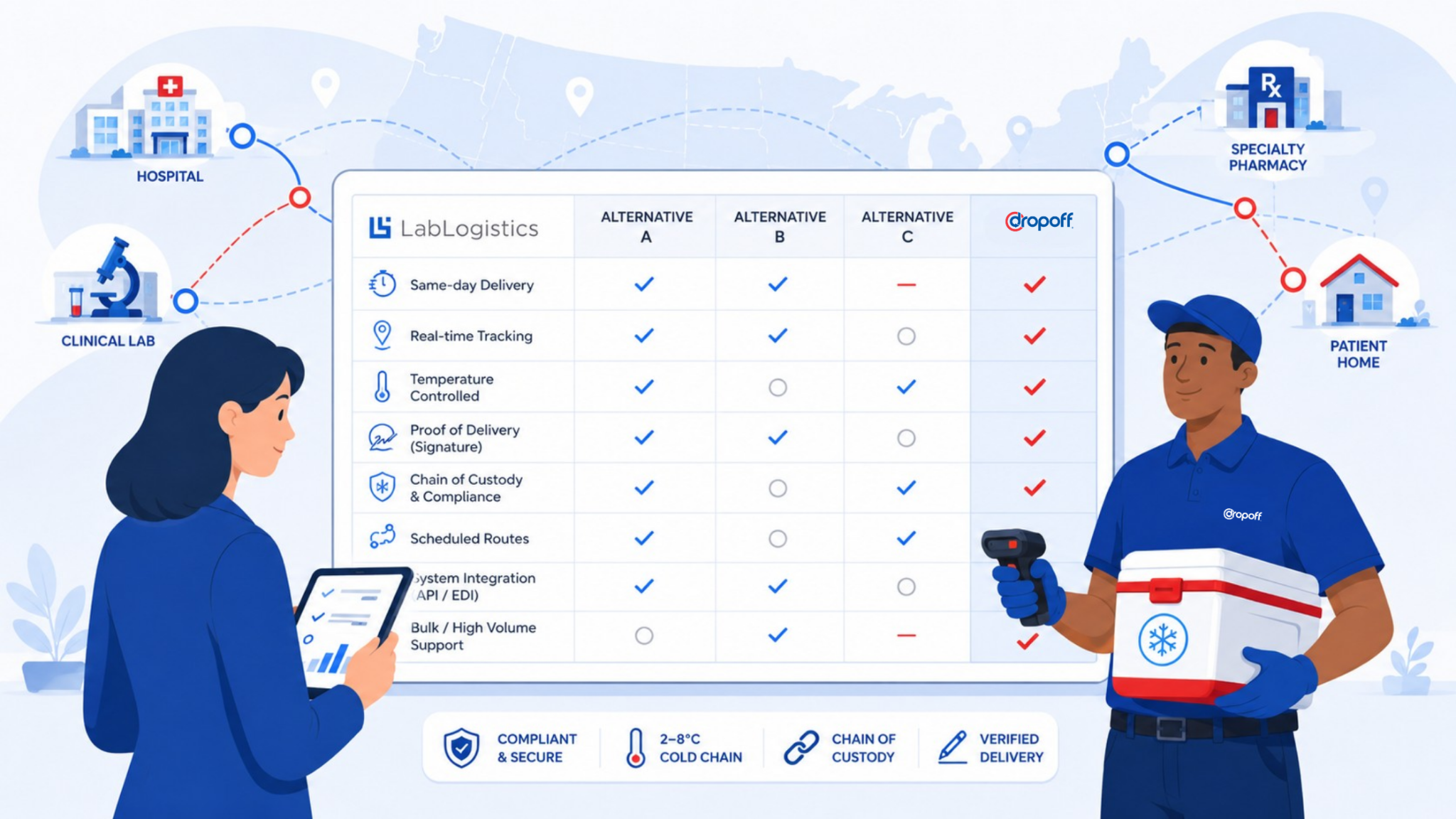
At Dropoff, courier opportunities go through one application system. If your application matches an opening in your area, a local team member can follow up with next steps. For healthcare-related roles, Dropoff points to experience across hospitals, labs, blood centers, specimen transport, and medical supply delivery.
That matters because medical courier work is not just standard delivery with a healthcare label. It involves timing, documentation, handoff accuracy, and workflows that often sit inside larger healthcare operations. A company with real experience in those environments is better positioned to onboard drivers into the role with clearer expectations and more relevant training.
That is part of the Dropoff difference. The company positions medical courier work as healthcare logistics, not just flexible driving. The focus is on structured workflows, operational support, and the kind of delivery discipline healthcare environments require.
If you are looking for a role that combines independence with responsibility, medical courier work can be a strong fit. It offers a practical path into healthcare logistics for drivers who are dependable, detail-oriented, and comfortable working inside structured delivery processes.
The role is not just about getting from point A to point B. It is about handling deliveries that often matter to labs, pharmacies, providers, and patients. For drivers who work well within that kind of structure, it can be a meaningful and steady entry point into healthcare delivery.
FAQ About Becoming a Medical Courier
Usually, no. Most medical courier jobs only require a valid driver’s license rather than a special medical-delivery license. That said, requirements can vary depending on the company, the client, and the type of materials being transported.
Yes. Many medical courier roles use driver-owned vehicles, as long as the car meets the employer’s standards for age, condition, insurance, and reliability. Some routes may also have additional vehicle requirements depending on what is being transported.
Some do. The requirement depends on the employer, the client, and the type of work involved. For healthcare-facing routes, HIPAA-related training is common because couriers may be handling deliveries connected to protected health information. HHS’ HIPAA training resources provide broader guidance on training expectations.
Usually not. Many medical courier jobs do not require prior healthcare experience. What matters more is reliability, professionalism, communication, and the ability to follow procedures in time-sensitive situations.
That depends on how quickly you can complete the application, screening, documentation, and any required training. Some drivers can move through the process fairly quickly, while others may take longer depending on employer requirements and route availability.
Both models exist. Some medical couriers work as employees, while others work as independent contractors. The structure depends on the company, the market, and the role itself.
At minimum, most employers expect current vehicle insurance. Some roles may have additional insurance or documentation requirements depending on the company and the deliveries involved.
A medical courier works inside healthcare delivery workflows, where privacy, handling, timing, and documented handoffs carry more weight than they usually do in standard parcel delivery. In that sense, the role is closer to healthcare logistics than ordinary last-mile delivery.