FedEx SameDay: What’s Still Available and the Best Alternatives
Most teams search for FedEx SameDay when something urgent is already on the line: a specimen losing viability, a store short on inventory, or a production line waiting on a critical part. In those moments, it helps to know exactly what FedEx still offers in 2026—and what it no longer supports.
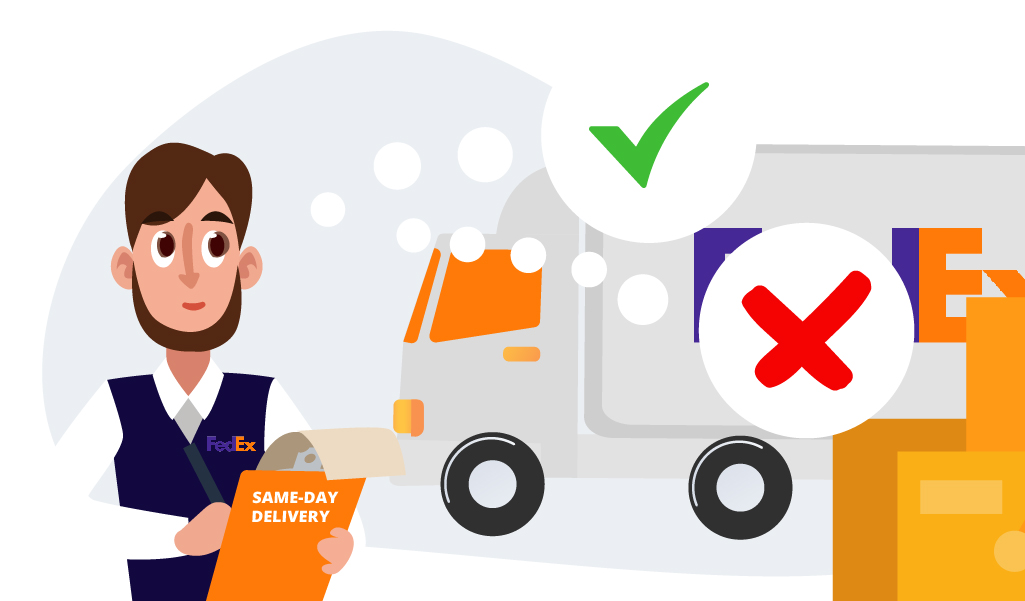
FedEx retired its SameDay City network in 2023, eliminating metro-level same-day delivery across the U.S. What remains—SameDay U.S. and SameDay Freight—is built for long-distance, one-off urgent shipments rather than predictable 2–4 hour windows or healthcare-grade chain-of-custody handling. This shift matters even more as same-day delivery continues to be the fastest-growing segment of last-mile logistics.
Healthcare workflows are especially impacted, where documented handoffs and compliant courier handling are required under HIPAA .
This guide breaks down what FedEx still provides, which services were discontinued, how these changes impact time-critical workflows, and how teams are rebuilding reliable same-day delivery programs across major U.S. metros.
TL;DR
- FedEx SameDay City was fully retired in 2023, leaving no metro-level same-day network.
- Remaining services—SameDay U.S. and SameDay Freight—are suitable for long-distance emergencies, not recurring or healthcare-grade workflows.
- For teams that need predictable windows, chain-of-custody handling, multi-stop routing, real-time tracking, or scheduled same-day, a dedicated partner is required.
Dropoff now fills the gap for reliable, compliant, metro same-day delivery in major U.S. cities.
What FedEx Same Day Actually Covers in 2026
FedEx SameDay U.S.
SameDay U.S. is now FedEx’s primary urgent offering. It is built for long-distance, point-to-point emergencies, not metro same-day operations.
It supports:
- air or ground routing depending on the lane
- shipments up to 150 lbs
- availability that fluctuates by airport, aircraft schedule, and distance
- one-off urgent moves rather than recurring workflows
For most organizations, this product works best when used rarely, such as a single critical shipment that must travel across states today. It is not a fit for consistent local windows, scheduled pickups, or regulated healthcare handoffs.
FedEx SameDay Freight
SameDay Freight is designed for palletized or consolidated freight over 151 lbs, often used in:
- industrial or aerospace downtime
- urgent manufacturing recovery
- heavy items requiring rapid movement
It requires pre-approval, has strict dimensional limits, and carries premium pricing due to air-movement dependencies.
What’s Gone: FedEx SameDay City
FedEx retired SameDay City nationwide in 2023 removing the only FedEx service designed for predictable metro same-day delivery.
This retirement eliminated:
- 2–4 hour in-city delivery windows
- intra-city medical and diagnostic transfers
- pharmacy, lab, and specimen transport
- retail/store-to-store same-day replenishment
- local courier-style service many organizations relied on
What remains today is functionally different—FedEx now supports long-distance urgent shipments, but not the structured, predictable metro workflows most same-day programs require.
What the Changes Mean for Time-Critical Operations
The retirement of SameDay City affects more than coverage. It reshapes how organizations plan, schedule, and safeguard time-sensitive work—especially in industries where delays compound quickly.
Local same-day coverage is no longer available
For workflows that depend on in-city, same-day pickup and drop-off, FedEx’s remaining services are not structured to step in. They are built around airport routing and long-distance movement, leaving no FedEx product that can reliably support a 2–4 hour metro window or multi-stop route inside the same city.
Costs increase for short-distance urgent moves
Shipments that previously moved through a local FedEx courier now often get routed into air-based pricing tiers, even if the origin and destination are only a few miles apart. This turns a $35–$60 metro delivery into a $100–$150+ urgent shipment, eroding margins for healthcare, retail, labs, and service organizations that rely on same-day multiple times per day.
Chain-of-custody controls are not included
Healthcare, lab, and pharmacy operations require documented handoffs, identity-verified drivers, temperature and handling controls, and other secure processes. FedEx’s current SameDay U.S. and SameDay Freight products do not provide these controls, which increases the risk of noncompliance and invalidated specimens.
Visibility becomes inconsistent
SameDay U.S. and SameDay Freight do not standardize real-time GPS tracking, photo confirmation, timestamped handoffs, or proactive exception alerts. Without these, operations teams lose the ability to locate drivers mid-route, diagnose delays, or close the loop with field teams—driving up customer service load.
As Sean Spector, CEO of Dropoff and longtime operator in healthcare logistics, often notes:
“Visibility isn’t about GPS. It’s about accountability — who knew, who acted, how fast. That’s the chain that actually keeps healthcare running.”
Recurring and routed workflows lose support
Most same-day demand isn’t a crisis—it’s routine: daily specimen pickups, store-to-store transfers, regional pharmacy delivery, multi-stop evening runs, and on-demand add-ons. These predictable, scheduled, or routed workflows are no longer supported by FedEx’s remaining products, forcing teams to rebuild their same-day operations entirely.
How Much Does FedEx Same Day Costs in 2026?
FedEx does not publish fixed pricing for SameDay services. Costs fluctuate significantly because SameDay U.S. and SameDay Freight are routed through FedEx’s long-distance air-and-ground infrastructure—not a metro courier network. Prices depend on several variables:
- lane distance (airport-to-airport routing, not point-to-point courier miles)
- urgency (time of day, required arrival window, cutoffs)
- dimensional weight and package handling requirements
- aircraft availability and lane constraints
- weather, routing delays, and operational exceptions
Because these services rely on aviation capacity and long-haul routing, even short-distance urgent shipments can escalate quickly in cost.
Typical operator-reported pricing ranges
- $45–$150+ for small urgent parcels routed into SameDay U.S.
- Hundreds to thousands for critical freight shipments routed by air
- Higher-than-expected costs for short-distance same-day moves (because they no longer qualify for metro courier pricing)
- Premium fees added for after-hours, weekend, or handling-sensitive items
Where organizations usually feel the pricing pressure
- Short-distance rushes: With SameDay City retired, a 5–15 mile local transfer may now be priced like an inter-city freight move.
- Recurring needs: Daily or multi-daily same-day shipments quickly multiply into a high, unpredictable cost structure.
- Healthcare workflows: Specimens, diagnostics, and regulated items incur additional handling constraints that often push shipments into higher-cost tiers.
- Reactive shipments: Prices increase substantially when air capacity is tight or when urgent routing requires deviation from standard schedules.
The bottom line
FedEx SameDay is built for isolated emergencies, not as the backbone of a same-day program. For teams with recurring, predictable, or metro-based same-day needs, the cost model becomes volatile and often unsustainable.
Alternatives to FedEx Same Day: What Each One Actually Does Well
UPS Express Critical
UPS Express Critical is one of the strongest solutions for high-value, mission-critical freight that may require air charter, specialized handling, or long-distance movement. It excels when the priority is distance and speed at any cost.
Where it falls short:
- not built for metro same-day
- not designed for recurring pickups
- limited support for chain-of-custody
- high, variable pricing for short-distance urgent moves
UPS is an excellent emergency partner — but not a replacement for SameDay City.
DHL Same Day / Sprintline
DHL performs well for international urgent shipments and heavy freight that requires time-definite, cross-border movement. Sprintline handles large consolidated freight quickly and reliably.
Limitations for U.S. metro operations:
- limited in-city U.S. footprint
- workflows optimized for customs + air movement, not healthcare/retail
- not designed for recurring metro same-day or multi-stop routes
DHL is unmatched globally — but not structured for U.S. city-to-city workflows.
Regional Couriers (OnTrac, LaserShip, etc.)
Regional parcel carriers can be effective for e-commerce and residential last-mile, especially in retail.
Where they struggle for operational same-day:
- inconsistent metro coverage
- variable driver training + standards
- limited or non-existent chain-of-custody
- healthcare suitability is inconsistent
- not optimized for scheduled, routed, or regulated same-day
These networks were built around parcels, not regulated or time-critical operational logistics.
Dropoff
Dropoff is purpose-built for metro same-day programs across healthcare, retail, industrial, and multi-location operations. Its workflows mirror what organizations relied on SameDay City to do — but with modern visibility, compliance, and driver standards.
Key capabilities include:
- trained, uniformed, background-checked drivers
- healthcare-grade chain-of-custody workflows
- real-time GPS, signature capture, and photo proof
- predictable 2–4 hour windows
- scheduled, routed, and on-demand delivery
- broad metro coverage in major U.S. markets
- 24/7 customer support and an operations-focused platform
If your needs resemble what SameDay City used to handle, Dropoff is the closest modern equivalent — and is designed for the workflows FedEx no longer supports.
How to Evaluate a Same-Day Partner in 2026
Choosing a same-day provider isn’t about finding the fastest option on paper. It’s about matching the design of the provider’s network with the design of your workflow. The wrong fit creates silent failure modes—missed pickups, incomplete visibility, compliance gaps, and costs that surface too late.
These are the factors that actually separate strong partners from risky ones:
1. Workflow Fit (the biggest predictor of success)
Most same-day demand is not a one-off emergency. It’s routed, recurring, multi-stop, or time-windowed work:
- lab pickups with fixed cutoffs
- pharmacy runs that must happen every evening
- store-to-store transfers across a retail network
- intra-city parts delivery for field service teams
A provider built around airport-to-airport routing or long-distance emergencies will fail these workflows. You need a partner structured for local route planning, repeatability, and on-demand inserts—the real mechanics of metro same-day.
2. Visibility and Communication (how operations stay ahead of failures)
Real-time visibility is not a “nice to have.” It’s how teams prevent escalation and triage. Effective same-day systems should include:
- GPS-level driver tracking (not batch-status updates)
- photo proof at pickup and delivery
- digital signatures
- time-stamped chain-of-custody logs
- automatic exception alerts
Without these, every delay becomes a manual investigation, usually involving store teams, nurses, lab techs, or field ops who don’t have time to chase status updates.
3. Chain of Custody (especially for healthcare and regulated work)
Healthcare, diagnostics, and pharmacy logistics require more than timely movement—they require documented handling, identity verification, and compliant transport. For an overview of how these standards apply in the field, see Dropoff’s guide to same-day healthcare logistics.
Key elements to look for include:
- named driver and vehicle details
- documented custody transfers
- temperature considerations
- secure transport handling
- adherence to HIPAA-aligned processes
If a provider cannot show proof of custody, you inherit the compliance risk.
4. Driver Standards (the human side of reliability)
The driver is the final link in your workflow. Their standards impact:
- reliability
- professionalism
- patient experience
- inventory accuracy
- brand trust
At minimum, same-day programs should include:
- background checks
- uniforms/identification
- specialized training for healthcare or high-value items
Many failures that look like “routing issues” are actually driver-quality issues in disguise.
5. Window Predictability (the KPI that matters more than speed)
“Same-day” is too vague to operationalize.
What organizations actually need are predictable 2-hour, 4-hour, or 6-hour windows, consistently met.
Predictability drives:
- staffing
- lab cutoffs
- store resets
- service SLAs
- production throughput
A provider offering “sometime today” delivery windows will create more downstream cost than the delivery fee you saved.
6. Flexible Scheduling (because urgent work doesn’t follow business hours)
Critical workflows often spike evenings, weekends, and holidays.
Your partner should be able to:
- pick up after cutoffs
- run late-night pharmacy or lab routes
- cover unplanned gaps
- absorb seasonal or daily volume swings
If coverage drops after 5 pm, you’ll feel it immediately in patient care, store performance, or service availability.
7. Total Cost of Failure (the real economics of same-day)
The cost of a same-day delivery is rarely the true cost. The downstream impact of a failure is what operators feel:
- a delayed specimen = invalid results + redraw + patient dissatisfaction
- a missed store transfer = lost sales + shrink
- a delayed part = idle technician + SLA penalties
- a missed lab pickup = overtime + re-routing + new courier fees
A strong partner reduces this operational exposure, not just the invoice price.
Nick Araiza, VP of Enterprise Sales at Dropoff, frames it bluntly from years of working with hospitals and multi-location networks:
“Hospitals don’t buy deliveries — they buy assurance. The real product is how predictable your response is when things don’t go as planned.”
The bottom line
A strong same-day partner isn’t defined by raw speed—it’s defined by operational fit.The right provider is the one whose network design, driver standards, visibility systems, and routing capabilities map cleanly to the way your organization actually moves time-sensitive work. When that alignment exists, speed becomes the byproduct, not the promise.
Industry Data: Same-Day Demand Continues to Rise
Same-day delivery isn’t tapering off—it’s accelerating. McKinsey’s analysis identifies same-day as the fastest-growing segment of last-mile logistics, driven primarily by healthcare, retail, field service, and regulated industries where delays directly impact revenue, compliance, or patient experience.
Across sectors, operational expectations have risen sharply:
- Proof of delivery is now an operational requirement, not a convenience.
- Real-time visibility is expected by default because teams must make mid-shift decisions using live data.
- Predictable 2–4 hour windows drive staffing, patient flow, store resets, and production throughput.
- Exception alerts and escalation paths are part of baseline service—not premium features.
This shift makes the absence of FedEx’s metro same-day network more meaningful. Organizations aren’t just moving packages faster; they’re coordinating workflows that depend on consistency, visibility, and verified handoffs. When these elements disappear, the cost is felt not only in logistics but across clinical teams, store operations, and service SLAs.
Same-day demand is rising because the operational consequences of delay have multiplied. And FedEx’s remaining SameDay services—designed for long-distance emergencies rather than predictable metro programs—no longer align with how modern operations actually run.
Real-World Examples: How Teams Are Adapting
Biodesix (Healthcare Diagnostics)
Biodesix, a leading molecular diagnostics company, discovered during the COVID-19 surge that national carriers couldn’t support the speed or handling requirements of critical samples. Delays of even a single day were impacting test turnaround times.
“Shipping through FedEx or UPS would take a whole extra day and add a day to our turnaround on our testing time. So we started looking at couriers.”
— Tanner Bolch, Manager of Test Processing, Biodesix
Their initial courier also fell short—packages were mishandled, and procedures weren’t consistently followed. When Biodesix moved their program to Dropoff, reliability and visibility changed immediately.
“We received much better service, hands down… After experiencing Dropoff, we moved all of our courier services exclusively to Dropoff.”
— Tanner Bolch
With Dropoff’s real-time tracking and portal visibility, Biodesix can now monitor live movements, prepare receiving teams, and maintain the integrity of fast-turnaround PCR testing.
Results:
- 93%+ on-time delivery rate
- 2,000+ medical deliveries per month
- Significant reduction in redraw risk and workflow disruption
National Retailers (Fashion, Specialty, and Multi-Location Brands)
Retailers with distributed store networks—such as fashion houses, specialty brands, bakeries, and national chains—face a different same-day challenge: keeping stores merchandised, stocked, and customer-ready.
Dropoff partners with national retailers including Zimmermann, Sprinkles, Nordstrom, Labcorp, McKesson, and Texas Health in various capacities across retail and healthcare settings. While their use cases differ, they share two needs:
- predictable window adherence
- visibility at every handoff
Retail teams rely on Dropoff’s real-time tracking, photo proof, and tight delivery windows to coordinate store resets, restock fast-moving items, and prevent internal escalations when high-value inventory moves between locations.
Representative outcomes:
- Improved store-to-store transfer reliability
- Reduced escalations caused by “no-visibility” delays
- More predictable merchandising and inventory flow
- Better coordination of end-of-day or promotional replenishment
Why These Examples Matter
In both use cases—diagnostics and retail—the gains didn’t come from faster driving.
They came from repeatability, visibility, and verified handoffs. These are the operational levers that SameDay City once supported and that FedEx’s remaining long-distance services no longer provide.
Why Many Organizations Now Use Dropoff for Metro Same-Day
The difference between FedEx’s remaining SameDay services and modern metro same-day delivery comes down to network design.
FedEx operates a national air-and-ground system optimized for long-distance emergencies.
Dropoff operates a metro courier network optimized for repeatable, time-sensitive workflows inside major U.S. cities.
That structural distinction shapes every operational outcome.
Dropoff supports workflows built on repeatability, precision, and verified handoffs through:
- Coverage across major metros
Built for intra-city movement, not airport-to-airport routing. - Predictable delivery windows (2–4–6 hour options)
The timing consistency needed for lab cutoffs, store resets, and service schedules. - Real-time GPS tracking with photo and signature proof
Visibility that lets operations teams plan the shift—not chase status updates. - Trained, uniformed, background-checked drivers
Standardized professionalism and compliance, especially critical for healthcare and regulated deliveries. - Healthcare-grade chain-of-custody handling
Documented handoffs, identity-verified drivers, and HIPAA-aligned workflows for specimens, diagnostics, and pharmacy. - Routed, recurring, and on-demand delivery
Support for the daily rhythms of multi-location operations—not just one-off urgent moves. - 24/7 live customer support
Essential for evening, weekend, or after-hours workflows when operational gaps create the most downstream cost.
A platform designed for operational teams
Real-time dashboards, exception alerts, driver tracking, and order-level documentation aligned to how ops teams actually work.
Where FedEx remains strong—and where Dropoff fits in
FedEx remains highly effective for long-distance emergency shipments, especially those that require air movement or cross-state routing. But FedEx no longer provides the metro-level, courier-style network that SameDay City once delivered.
Dropoff complements FedEx’s long-distance strengths by supporting the daily, time-sensitive, intra-city work that keeps healthcare systems, retailers, labs, and industrial operations running predictably.
This is not a question of speed—it’s a question of workflow fit, repeatability, and operational control.

FAQs on FedEx Same Day Service
Yes. FedEx SameDay U.S. and FedEx SameDay Freight remain active and can support long-distance urgent shipments. However, FedEx SameDay City—the metro courier network—was fully retired in 2023, which means FedEx no longer offers in-city same-day delivery windows or local courier-style service.
SameDay U.S. → Long-distance, point-to-point urgent shipments (often by air).
SameDay Freight → Palletized freight over 151 lbs needing rapid movement.
SameDay City (retired) → The only service that offered predictable 2–4 hour metro windows, healthcare courier capabilities, and intra-city same-day.
Only the long-distance products remain; the metro program no longer exists.
FedEx consolidated its same-day operations during a company-wide restructuring.The metro courier network—built around in-city 2–4 hour service—was eliminated nationwide to prioritize long-haul and air-based urgent shipments. This shifted FedEx’s same-day capabilities away from local, repeatable workflows and toward episodic, long-distance emergencies.
FedEx does not publish fixed pricing because rates vary based on:
distance / lane
urgency and time-of-day
package weight and dimensions
aircraft availability or routing constraints
Typical operator-reported ranges:
$45–$150+ for small urgent parcels
Hundreds to thousands for air-routed critical freight
Significantly higher pricing for short-distance same-day now that metro courier service is gone
Additional premiums for after-hours, weekend, or handling-sensitive shipments
FedEx Same Day is priced for rare emergencies, not daily same-day workflows
Not at a healthcare-grade level. SameDay U.S. and SameDay Freight do not include:
documented handoffs
identity-verified drivers
medical handling protocols
HIPAA-aligned workflows
temperature or secure-transport options
For healthcare, chain-of-custody compliance usually requires a specialized medical courier rather than a long-distance same-day service.
No. The remaining SameDay services are not designed for:
daily lab pickups
pharmacy-to-clinic routes
multi-stop store transfers
end-of-day service parts runs
predictable 2–4 hour windows
structured metro workflows
These functions were part of SameDay City and are no longer available through FedEx.
Organizations that need predictable intra-city same-day, especially those in healthcare, retail, and industrial operations, typically choose providers with:
documented chain of custody
trained, background-checked drivers
real-time GPS tracking with photo proof
scheduled, routed, and on-demand workflows
consistent 2–4 hour delivery windows
coverage across major U.S. metros
Dropoff is one of the closest modern equivalents because it’s built around the same types of metro workflows SameDay City used to support, rather than long-distance emergencies.
Tracking is available, but not standardized in the way most modern metro programs require.
SameDay U.S. and SameDay Freight do not consistently provide:
real-time GPS position
photo proof at pickup and delivery
digital signatures optimized for chain of custody
proactive exception alerts
Most operators need these capabilities for compliance, staffing, and operational forecasting.
You can attempt to, but it’s rarely cost-effective or reliable.
Because SameDay City was retired, even short-distance in-city shipments may be priced as long-distance urgent shipments, often routed through airport-based capacity.
This leads to:
higher costs
unpredictable timing
no healthcare compliance
inconsistent visibility
For intra-city movement, organizations usually shift to a dedicated same-day courier network.